

Will mastering two-pointers pave the way to Sam? Shaun Casey examines the issue…
RAY Boyne shared an interesting graphic on ‘X’ during the week, ranking the teams in Division One based on their two-point outputs. His graphic more or less mirrored the league table as it stands.
Only Donegal and Mayo were in different positions. Mayo have kicked the most scores outside the 40-metre arc (18) across the opening five league games, but sit second in the overall league table, one point shy of Jim McGuinness’ men.
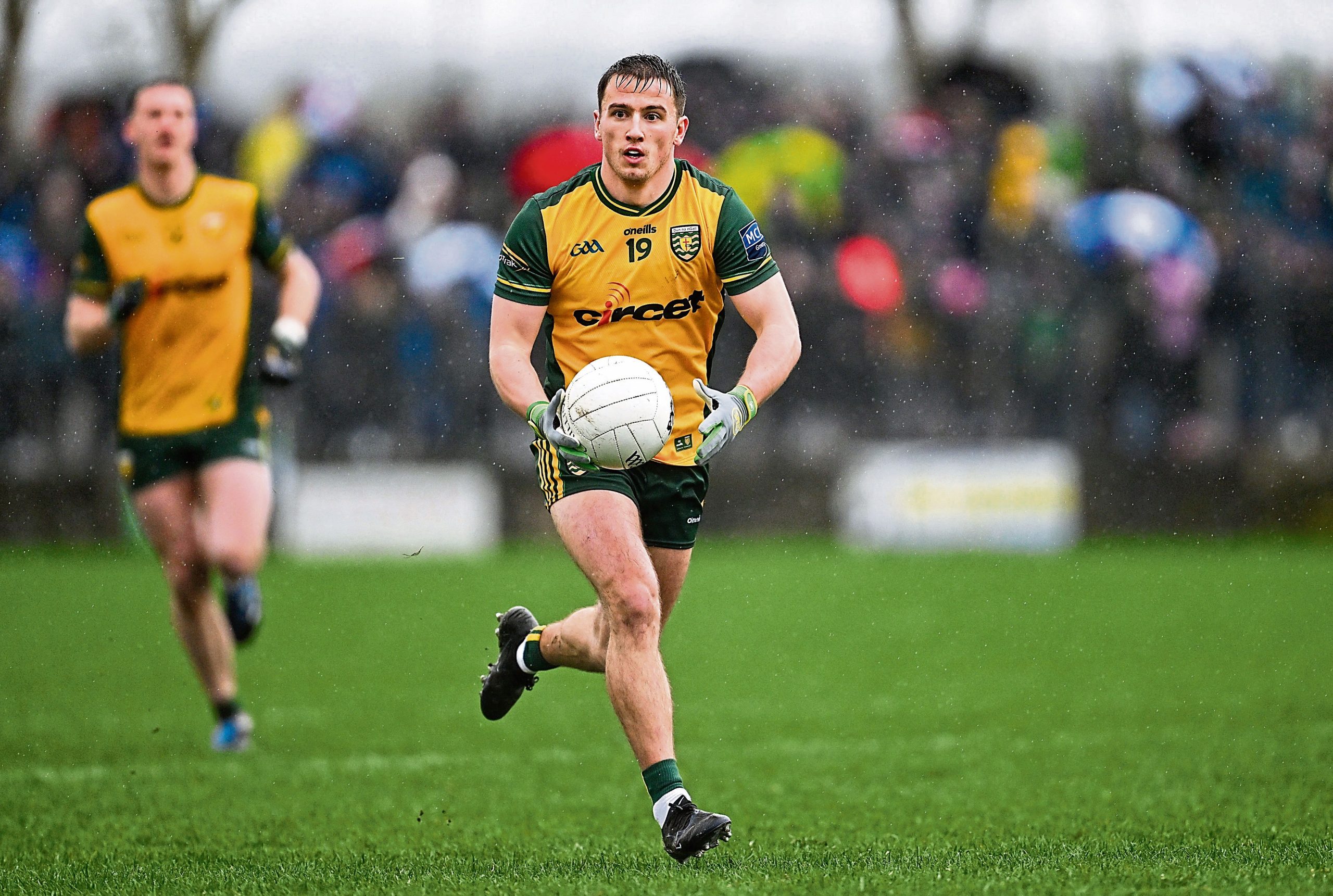
Donegal, last year’s beaten All-Ireland finalists, are top of the tree in Division One and are just below Mayo in terms of two-point scores, with 15 tallied inside their first five matches.
On that basis, in the simplest of terms, the teams that can kick the most two-pointers will have the most success. Football isn’t as cut and dry as that usually, but that’s how things look this early in the season.
Mayo is the perfect case study this year. They were knocked out of the All-Ireland series in 2025, finishing bottom of their group, having suffered defeats to Cavan and Donegal either side of a round two victory over Tyrone.
In those three championship games, Mayo registered just two two-pointers. They both came from Ryan O’Donoghue frees in their loss to Cavan, but Andy Moran has developed a side hungry for long-range efforts this season.
Cargin coach Ronan Devlin is wary however, not to read too much into that this early in the year. “That stat doesn’t surprise me, but I don’t know what way to look at the National League,” he said.
“Some of those teams will learn an awful lot. There are wily old managers like Kieran McGeeney and Jim McGuinness. Don’t be surprised if the likes of Kerry and Mayo flip that on its head later in the year and start banging in goals.
“Teams will have to push out on them (creating goal opportunities). It’s far better and less prescribed and predictable than it used to be, and it’s more interesting, which is good.”
When the new rules first came into play, Devlin was cautious. From a coaching point of view, his Cargin side and so many other teams, have learned a lot 12 months on.
“They’re a challenge but a nice, fresh challenge,” he added. “I was sceptical at the start, just on the practicalities, not on the kicking element. I thought there would be more arguments around what was a two-pointer and what wasn’t.
“There was a couple of issues, but nothing major. We adapted rightly and Cargin are well equipped to kick two-pointers. We have good long-distance kickers like Tomás McCann, John McNabb, Pat Shivers and more, but I don’t think we fully utilised it.
“We’ll have to dig deeper on our coaching and what we did, to see why other teams were maybe more effective at it. You can see a lot of teams doing the same things, they’re starting to stretch the play and get ahead of the ball.
“It used to be the case that you were trying to create gaps for goals, whereas now I think teams are trying to stretch defences to give you a bit more time to get a two-point effort away.
“They’re trying to lull the defence out whereas before the new rules, the defence was very focused on camping in. It was horrible, so some teams are getting really good at it.”
So much can dictate a team’s ability to raise an orange flag. Weather is a big one. Team selection, opponents, venues, but it’s certainly something that the top teams in the country are trying to develop.
With the weather the way it has been over the last couple of weeks, Devlin thinks teams are developing their two-point game with an eye on the summer. Dublin, for example, in their win over Monaghan, had 11 two-point efforts, but only two split the posts.
Come the summer, however, when the ground hardens and the sun is in the sky, perhaps all that work and practise will pay off when it matters most.
“You look at some of the games last weekend, Derry (against Cork) racked up a massive score in the second half which would make you think they had the breeze and they used it well.
“In the Donegal (v Galway) game there was a really significant breeze so you have to use the breeze well and don’t stupidly kick yourself out of it, you can clock up a lot of two-pointers.
“In terms of the weather, people think of wind and rain, but they don’t realise the effect the temperature or even a bit of moist in the air has on the flight of the ball. It can take 10 or 15 yards off a shot even if it looks like a decent enough day at this time of the year.
“The weather plays a massive part. With that bit of weight on the ball, it’s hard to judge the breeze, but also there’s just poor kicks because it’s so early in the year and teams haven’t sharpened up yet. I think we’ll see a lot more of them come the summer.”
Previously, the game was so reliant on strong runners and work-rate.
Skills were perhaps secondary when it came to team selection. But with the introduction of the two-pointers, carrying a player with a big boot, who may not work as hard, has its advantages.
“You see Barry McNulty from Leitrim, I don’t know much about the fella, but he must be good at the two-pointers because two weeks in a row, he’s come on and you see that he’s just a complete specialist,” Devlin said. “You might find that teams will start carrying fells like that.
“If you’re choosing between two players now and one of them is more dangerous from two-point range, you’re going to go with him. If there’s someone that’s maybe not the best worker but a great kicker, you might hold him until you have the wind.”
Defensively, they’ve cause havoc as well. Against Armagh two weeks ago, Donegal’s Michael Langan posted a brace of two-pointers inside the first 12 minutes of the game, forcing the Orchard County to place Jarly Óg Burns in a man-marking role for the rest of the encounter.
The threat of two-point kickers splitting the posts can cause headaches defensively. Pushing out on the opposition to deny long-range efforts poses the threat of space in behind and the defensive structure being pulled apart.
“The likes of Langan, he’s kicking two-pointers right from the throw-in and a fella like that has to be watched,” Devlin explains. “That causes a ripple effect elsewhere because when you used to have to mark a corner-forward or a full-forward, that was grand.
“Teams love defensive structure but if your centre half-back has to run out and mark somebody, you’re already creating a vacuum in behind.
“Even though the two-point threat might get nullified, there’s a (goal) opportunity that opens because of that so it’s definitely challenging from a coaching perspective for defences if you have to mark someone out the pitch.
“I always found midfield a very free place to play because you were never man-marked. Midfielders had the run of the pitch, but now, if you’re going to be marked out there then that creates more room inside.”
While Devlin is a fan of two-pointers and the chaos they cause, nothing beats rattling the net: “I don’t care what anyone says about the two-pointers, I still love to see the net rippled.
“People had mentioned bring in the four-point goal but even as it is, there’s still a huge psychological lift from getting a goal.
“People maybe thought the two-pointer would devalue the goal, but goal chances are still available.
“The lift the crowd gets from the net rattling is brilliant and you come away with a bounce. It’s only worth one more point but there’s still something about it.”
Related posts:



Receive quality journalism wherever you are, on any device. Keep up to date from the comfort of your own home with a digital subscription.
Any time | Any place | Anywhere
Get the app for the best Gaelic Life experience