

THERE’S three parts to the life cycle of a GAA player. Two, you’ll be very much acquainted with, and one that doesn’t quite get the same attention as its more glamorous siblings.
Like any great story, it begins with the set up. And in the world of a GAA player that means as soon as the air hits your face the day you’re born. Bill Shankley, a Liverpool great of yesteryear once said that “Some people think football is a matter of life and death. I assure you, it’s much more serious than that.” Although it was said tongue in cheek, the reason it’s still as relevant now as it was 50 odd years ago is that there is a bit of truth to it.
We’re brought up with GAA around us. It’s a cornerstone of our communities. It’s woven into our schools. It plays a huge part in the forming of our identities.
Think back to your primary school years. Waiting for the bell to go so you can rush out to the playground and begin to pretend to be your heroes. For me it was Canavan or Cantona depending on the ball. The battle as to who was allowed to shout their name was just as ferocious as the one for the ball.
As a child you idolised the county stars. You dreamt of following in their footsteps. You would watch them on a Sunday and be straight out to the garden trying to replicate the highlights until you were called in for tea.
The excitement of getting to a Championship game was like nothing else you’d ever experienced. It was all anyone was talking about. I guarantee there’ll be kids in Derry right now licking their hands in eager anticipation of Rory Gallagher’s men taking to the field in this weekend’s Ulster Final.
From school to club, your mental bandwidth could be almost fully consumed by being a part of the GAA family and bells and whistles it entailed.
That first phase of the players life cycle…it’s magic.
Then you graduate from the pre-competitive, developmental years into secondary school and beyond. Now things start to get serious.
For some of you reading this, you’re in the midst of it. You might even have a game over you in the last couple of days. Your days, weeks, months and even year can be hugely influenced by what being a GAA player means to you.
There’s the obvious things like wanting to train hard and eat well so you play at your best. Then there’s the more subtle things, like who you spend most of your time with and what success looks like to you.
When you’re inside the bottle you can’t see the label, so it’s more normal than not to wear that GAA player identity like a badge of honour.
Your teammates are more than just that, they’re your family. Your happiness is tied to you and your team’s performance. Your routine is built around that of the team, its training schedule and fixture calendar. You are a GAA player, not just someone who plays GAA.
And you love it. It gives you purpose, meaning, and some of the best and most memorable times of your life.
But just like all good things, at some point, it has to come to an end.
And this is where we see the birth of the third phase of the GAA Players life cycle – The retired player.
The forgotten men and women who are no longer playing. Some of them will go into coaching within their clubs, as a way of giving back and to try and scratch that itch that they can’t help but get. Some of them will live vicariously through their children, and shoot every shot they take.
But a lot of them will find themselves in a post playing retirement limbo. Not quite sure what to do with themselves as they’ve spent their entire lives up to this point so seamlessly intertwined with everything GAA they don’t know what else there is.
They’ve spent 20 years plus having team goals, team training sessions, teammates and now that the safety blanket of those things are gone they’re a little lost as to what they do next.
So that’s what we’re going to explore in this article each week. I want this to be the retired players pathway to rediscovering their purpose, passion and performance.
Just because you’ve hung the boots up doesn’t mean you’re done!
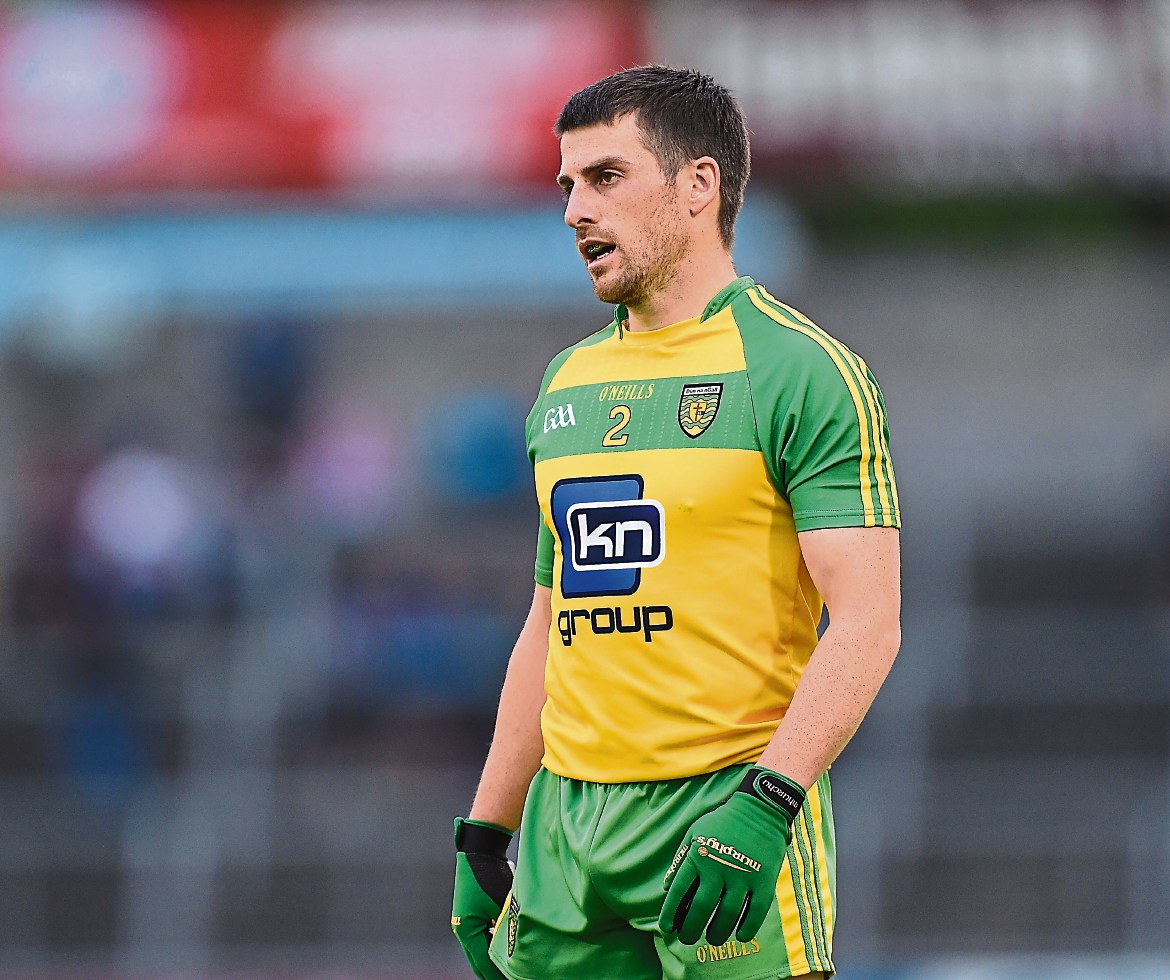
25 June 2016; Paddy McGrath of Donegal during the Ulster GAA Football Senior Championship Semi-Final game between Donegal and Monaghan at Kingspan Breffni Park in Cavan. Photo by Ramsey CardySportsfile
Receive quality journalism wherever you are, on any device. Keep up to date from the comfort of your own home with a digital subscription.
Any time | Any place | Anywhere
Get the app for the best Gaelic Life experience