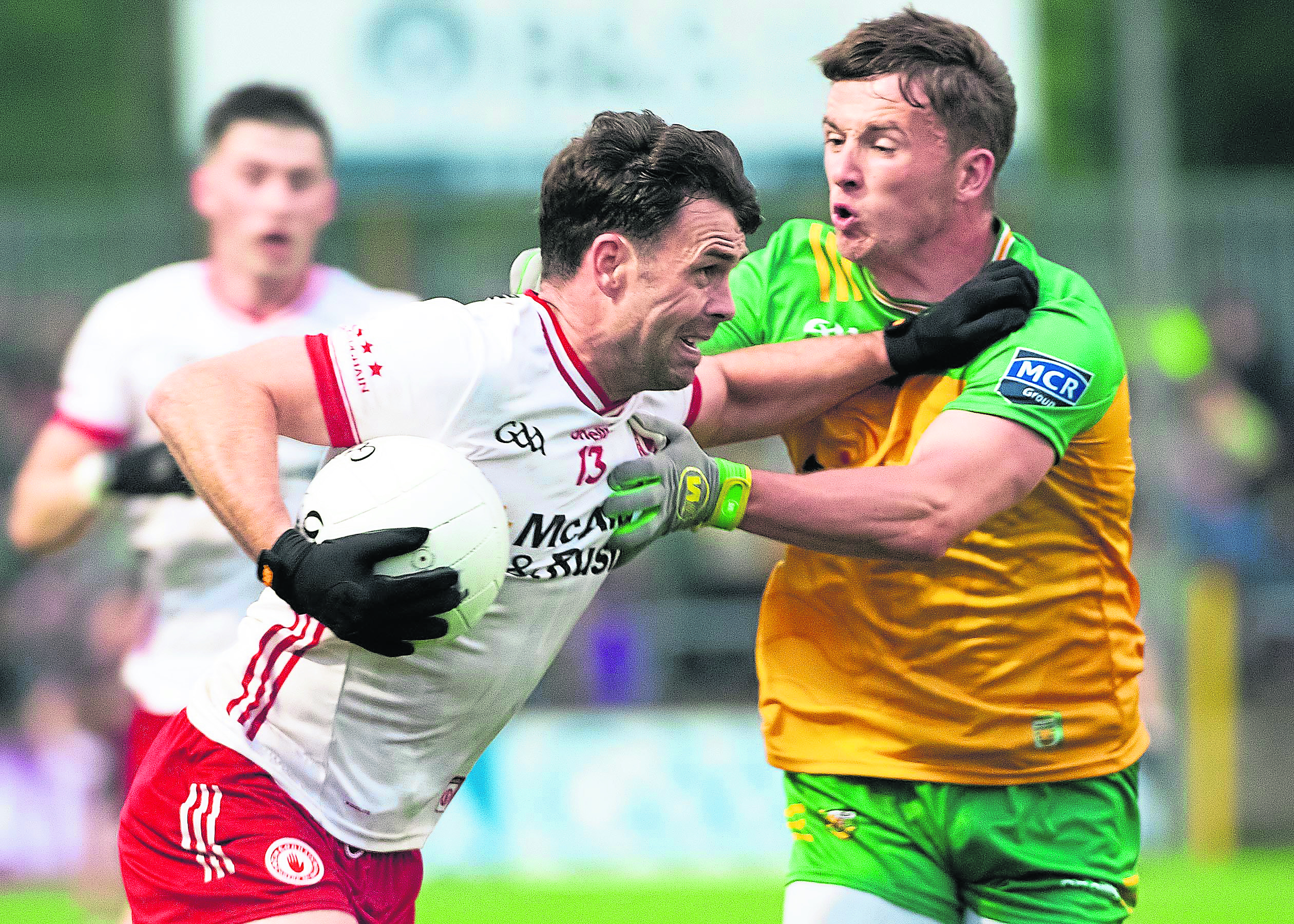


The lack of a centralised database hasn’t stopped keen statistians from providing a brilliant service to GAA fans. Niall Gartland finds out more
IT’S one of quite a few bug-bears harboured by GAA journos the length and breadth of the country – the lack of a central GAA database for all things statistical.
Apparently that will change at some undetermined date – but doubts remain. The Irish Examiner reported in late 2022 that the “the GAA is close to developing a centralised match results and player records archive as part of its soon-to-be-updated official website.” Since then, radio silence.
So where does that leave us? Well Wikipedia is a decent source but it ain’t gospel. For example, there are significant omissions in the 2025 National Football League page – scores for round three to round seven in Division One are nowhere to be found. And it gets worse further down the food chain.
The GAA website itself is fine in that regard (though rather unintuitive) but when it comes to historical data, it’s not much use.
Thankfully, there’s amateur historians and statisticians around the country who have grasped the nettle and kept the GAA public informed.
Cork man Eoin Keane, a teacher by profession, is the brainchild behind an app (Know the Game) that tabulates thousands of championship games from 1887 on. They can be filtered by team, opposition and venue. It also, handily, doubles as a predictor competition which can be utilised by clubs.
Taking up the tale, he says: “My two main interests in life are the GAA and history. I write a Cork hurling blog (https://boldthadyquill.blog), and I’ve often gone down rabbit holes of stats and history. During Covid, I even put together an Excel document off my own bat, logging Cork games and scores.
“I’d say around Christmas 2022, maybe earlier, I was chatting with a friend (James Buckley) over a few cans. We were giving out about the GAA and how there’s no reliable stats to go to other than Wikipedia, which, to be fair, is a great resource.
“I said that there should be a proper website dedicated to stats. I couldn’t do it myself – I’m not a computer man – but James is a software engineer, and he said he could. So between the two of us, we spent the bones of two years going through every game, from the most recent right back to the very beginning of Gaelic games in the late 19th century.”
Quite the undertaking, and the quirks of 19th century football and hurling only served to complicate matters.
“All told, there are upwards of 7,000 games. I input everything into Excel, ten pieces of data for each game: the teams, goals, points, score difference, venue, and so on. That added up to around 75,000 bits of data, all manually entered.
“There are still a few kinks. When you’ve got 70,000 manual entries, even if 99 per cent are correct, that still leaves 75 errors somewhere. For example, over the past year we noticed an issue with how home and away teams were logged, it threw things off when a match was played at a neutral venue. At the moment we’re rebooting the database to fix those kinds of errors, but it can be fairly time-consuming.”
He continued: “It can get a bit murky when you’re going back 100 years and looking at things like scoring differences. You could draw up a graph of the scoring difference between two counties, but once you go back to the 19th century, it gets complicated. I can’t remember the exact year, but at one stage goals were worth five points. If you go back even further, there was even a rule where you could get half a point for something else.
“I think the original rule in hurling, instead of today’s 65, was that you got a half-point. There are all these old rules to take into account when deciding what data to include. And then, of course, in the first 20 years of the GAA, nearly every game was decided in the boardroom! A match would be played, then there’d be an appeal saying a certain player was ineligible, and suddenly it was decided that Cork had actually won the Munster final, even though Tipperary had beaten them.”
Keane himself is frustrated at the lack of an official centralised database. It’s by no means an impossible endeavour and is ‘badly needed’.
“I contacted the GAA in 2023 about this, and they told me they hoped to have something up within six months. That was two years ago. I really hope they do get something in place, because it’s badly needed. For an organisation of this size, with all its history, the records just aren’t being properly collated. At the moment, it’s left to amateurs to piece things together. To be fair, some counties are excellent – for example, the Terrace Talk website in Kerry is brilliant. The Mayo Blog is great, too. And there’s a fella in Longford doing fantastic work.”
Forensic though it is, the Know the Game app takes a broad-brush approach to historical stats. Others hone in on their respective counties, like Eunan Lindsay, who first became interested when serving as Public Relations Officer of Tyrone GAA. He has now developed an ever-expanding archive of information related to Tyrone GAA teams and players, and his Twitter page (EunanJack) has become an invaluable resource in that respect.
“When I was PRO, I kept stats on the boys who were playing, just to have them. After I stood down as PRO, I let it sit for a few years and did nothing with it. At the start of Covid, I picked it up again.
“At the time, there was a good record on the Hogan Stand website. They had all the teams, and that was the basis. When I started doing it properly, I went back through the Ulster Herald and the Irish News archives to check things that didn’t seem right. You end up double-checking a lot of it anyway, sometimes somebody is left out, or the scores don’t tally. You might even be triple-checking. If something looked a bit suspicious, you had to go back over it.”
Lindsay’s work has been recognised in various publications in recent years. It’s nice to get a few plaudits, but he too recognises that the GAA are missing a trick at central level.
“It’s nice that these things can be recognised. I can’t remember exactly what put me in the notion of doing it. One of the first things I recall was Sean Cavanagh hitting 200 appearances. It wasn’t widely tracked at that stage. Between football and hurling, maybe Brendan Cummins had done it, and then (Stephen) Cluxton ended up overtaking them. But at that time, there wasn’t a whole pile of records. You’d think it would be worth Croke Park’s while to have someone doing it centrally, rather than leaving it to individuals, but that’s another conversation entirely.”
Lindsay is continuing in the lineage of other Tyrone GAA historians down the decades, including Joseph Martin, author of the acclaimed ‘The GAA in Tyrone’ history series. Time will tell whether he’ll go beyond the world of social media and write a book or develop a website.
“I’m now back as far as about 1945. That’s the tricky part, the war years. The championship is okay, but even looking at the Ulster Herald records, there are still a lot of blanks. I don’t really have the time at the minute to go back further.
“I know Joe Martin has a lot of them in his book already, but I’d like to get all the championship teams done at some stage.
“I might put up a website at some stage, but before that I’d want to fill in as many blanks as possible and get the hurlers included too. That’s going to be a challenge, because the records just aren’t there.”
Receive quality journalism wherever you are, on any device. Keep up to date from the comfort of your own home with a digital subscription.
Any time | Any place | Anywhere
Get the app for the best Gaelic Life experience