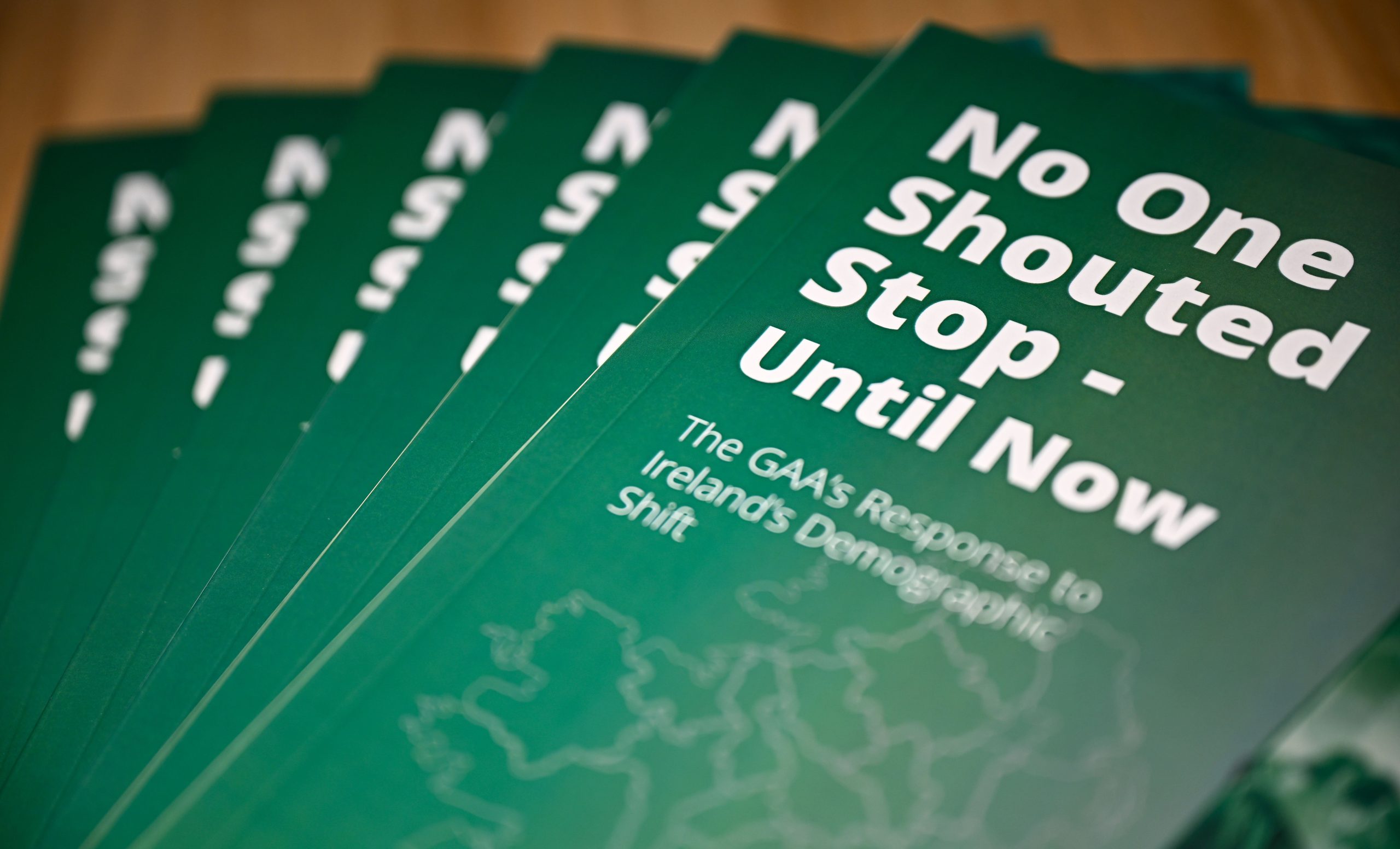


IRELAND’S shift from a rural to an increasingly urban society is creating one of the greatest challenges the GAA has ever faced.
Rural clubs struggle to field teams as numbers decline, while urban and suburban clubs are stretched by rising populations, overused facilities, and a growing demand for volunteers. The GAA’s National Demographics Committee report highlights that this demographic change is no longer a distant concern.
Despite the seriousness of the problem, the committee insists this is not a moment for despair. With the right actions, the demographic shift could offer opportunities for renewal. Rural depopulation and urban overcrowding are real, but neither is irreversible, and strategic planning can help the Association reshape its future.
Census 2021 (NI) and Census 2022 (ROI) show that 12 per cent of Ulster’s male population under 35, around 60,000 young men, are registered GAA players. But the younger age groups reveal fragility. Children under five number just over 3,100, six to eleven-year-olds about 20,000, and twelve to fourteen-year-olds 12,578. Older youth and young adults number 8,745 and 17,392 respectively. While participation is strong today, shrinking youth cohorts threaten the long-term sustainability of many clubs.
Antrim illustrates the wider trend. Boys under five are projected to fall from 49,800 in 2022 to 46,400 by 2040. Ages six to eleven drop from 56,500 to 47,000, and twelve to fourteen-year-olds from 29,000 to 24,300.
Even the fifteen to seventeen group peaks in 2025 before declining to 25,100.
Similar patterns are emerging across Ulster, leaving rural clubs increasingly vulnerable.
The committee proposes several measures to protect these clubs. New by-laws would make it easier for urban players to join rural teams while limiting transfers in the opposite direction.
Dual eligibility would allow players with family or historical links to both urban and rural clubs to maintain connections, and transfers based on family ties would be simplified.
A key motion for the 2026 GAA Congress would permit championship matches to be played with fewer than 15 players, including eleven-a-side or nine-a-side formats, helping rural clubs that cannot consistently field full teams.
A second motion aims to make it easier for clubs to remain active, retained, and to grow sustainably. Many recommendations can be implemented immediately without rule changes.
The message is urgent but clear: demographic change will reshape the GAA unless it responds decisively.
With early action, however, these shifts can be a catalyst for renewal rather than decline. For the future of rural and urban clubs alike, “No One Shouted Stop” must remain a warning, not a description of what happened.
Related posts:


Receive quality journalism wherever you are, on any device. Keep up to date from the comfort of your own home with a digital subscription.
Any time | Any place | Anywhere
Get the app for the best Gaelic Life experience