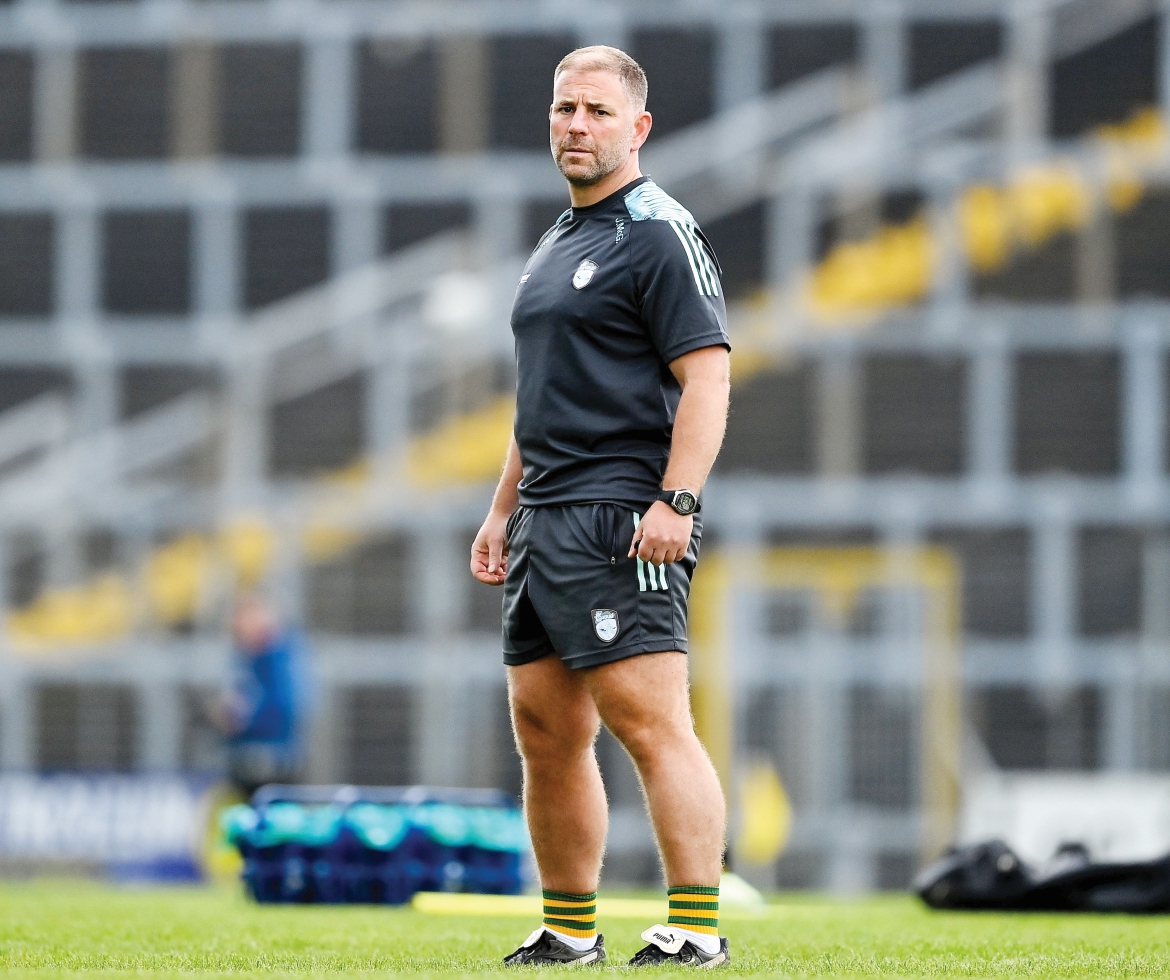


There has been much debate about how the demands of a Gaelic footballer have changed with the advent of the FRC’s rule changes. Jason McGahan is Kerry’s High-Performance Manager and he spoke with Michael McMullan
Jason McGahan was born in Canada, lived in Armagh but is now settled in Kerry. After graduating from Ulster University, he spent time in Australia.
With a short spell with Sydney Swans came the realisation of the importance strength and conditioning had within a camp.
After returning to Armagh, he started lecturing and had opened a gym. There was an itch to return to study. That itch took him to University of Limerick where he met Cian O’Neill who was in with Kerry at the time under Éamonn Fitzmaurice.
McGahan’s PhD proposal opened the door to Fitzmaurice and the Kingdom as part of his studies. When the phone rang, in 2018, offering him a full-time post in Kerry, it was too good to turn down. He’s been involved in All-Ireland success at senior level and as someone who loves sport and GAA, it’s the career of his dreams.
He chatted with Gaelic Life about where conditioning sits with football having taken a change of direction under the FRC’s new-look template.
Michael McMullan: There has been a lot of talk about the new rules and how conditioning needs have increased. Based on any findings, is this accurate?
Jason McGahan: If you’re talking to players or people that are watching the game, they say it is. I have compared the data from the sample size of 2024 and ’25. I’ve looked at all the GPS metrics. There’s nothing that’s telling me that the players are running more distance or running more sprint distance at high speed. When I look at some of our own research on the new game, it’s not showing me anything. If anything, it is slightly down. The data I have and what I’ve been looking at, you have to try and compare it from league to league. I looked at National League games. Between 2024 and ‘25 we have the new rules but I don’t see GPS changes. We have to be very careful about it because GPS data doesn’t tell you everything. You have to go a bit deeper. It doesn’t tell you how many jumps you’re doing, how many tackles you’re committing or how many times you have been tackled. It doesn’t tell you about contacts you are taking or the smaller decelerations that you’re doing that are still fatiguing you.
M McM: So, the GPS is not reading the movements of a game?
J McG: In layman’s terms, if there is a five-by-five box and we’re tackling for 15 seconds, the GPS isn’t going to tell you anything but are we are working hard. You’re not moving too far but I’m tackling you, I’m making contact and you’re making contact. It’s a different type of metabolic conditioning. If you look at the new game, there’s a lot more of that type of work going on. Around the middle, we are contesting for kick outs. There are smaller types of rucks where players are getting fatigued a lot more but it’s not shown in the GPS. The one-to-one battles inside, between forwards and defenders, the GPS isn’t showing that. Players are in contact a bit more, there is one to one movement but they’re not going too far.
M McM: So the GPS units are measuring just the core elements, for example, distance covered and the number of explosive runs?
J McG: I could be wearing a GPS and my sprint distance is set at 22km an hour. You could be playing for Derry and your sprint distance GPS is set at 24km an hour. In this case, we are not really comparing like for like, so it can be very misleading for some sports analysts, coaches or S&C coaches, depending on the bands their GPS is actually set at.
M McM: So every GPS unit is set differently. Why are they not the same?
JMcG: A lot of my research is based off what we had done back in 2018, whereas now a lot of them are a bit higher, and it would look at a profile of players a bit differently. A lot of the research that we get is based on the absolute. Say for example, your GPS high speed is set at 17km an hour, it’s not reflective of the individual. Look at Gavin White, he is totally explosive. Then you may have a Mark O’Shea who is a workhorse but isn’t as explosive. Their GPS are both set the same, as absolute, but, technically, they’re not the same. Their GPS units must individualise, based on their own profile. There should be more research done around the area as well. In terms of a lot of the research we’ve done on Gaelic football, by mself and Shane Malone (a lecturer in TU Dublin) we’ve used the same GPS bands (different settings for assessment). You may have an S&C coach coming in from soccer or rugby with a different set of bands. Technically, nobody’s right or wrong, but there’s no set parameters. There is work that I’m doing with the Ulster University, on a band that’s specific for Gaelic footballers based on the physiology of the game.
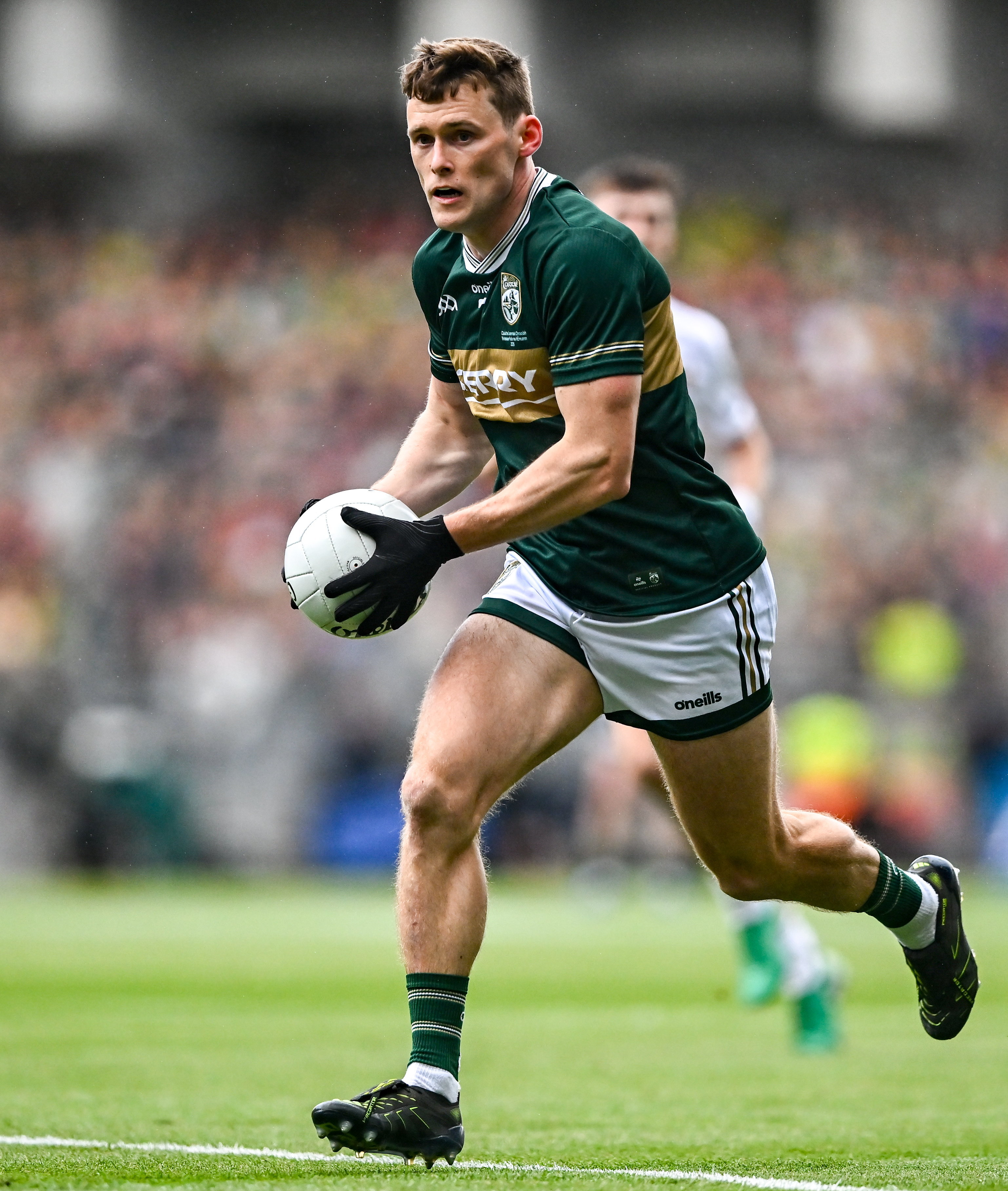
DIFFERENCE…Gavin White (pictured) and Mark O’Shea are examples of players who would have different GPS readings
M McM: You mentioned bands. What do you mean by that?
J McG: Normally you’ve got five bands in most GPS units and that’s up to the discretion of the sports scientist or the S&C working them. We want to get it that it is more individualised. You may have a fast player but he might have a poor engine or aerobic base. Or you may have a good work horse or aerobic base, but he could be a slow player. Their bands should not be set the same. The physiological make-up of the player has to be taken into account when it comes to GPS as well. When we’re starting to monitor this, we must individualise it, making it more relevant to the player. There’s no research done yet on that, so it really is a minefield. You have accelerations, decelerations, what distinguishes an acceleration and what distinguishes a deceleration. We all know that decels are a high-loading movement, but what are we measuring that with? The GPS doesn’t take all the factors into the consideration. It doesn’t factor in the individualised player, it doesn’t take in the opposition you’re playing or the environment. It doesn’t take in many jumps or contacts, the high-end individualised decels or accelerations.
MMcM: So, for all the talk of the demands between what we had and the new look game, we need more research….
JMcG: Look at the National League. The opposition you play and their tactics also impact on the GPS metrics. From my research, I compared a Division One team with a team playing in Division Three. The Division Three team outperformed the Division One team in all the GPS metrics. I didn’t see that coming. We then looked at the games themselves, at how the two teams played. If you look at the tactical element of the game, I found that the Division Three team handpassed the ball more but thethe Division One team kick-passed the ball more. The first pass out of defence for a Division One team was a kick-pass. The first pass of the defence for the Division Three team was a handpass. We also looked at where did they do most of their tackling. The Division One team pressed further up the field, whereas the Division Three team sat back and let the opposing team come onto them. We also looked at the skills and efficiency of the game. The Division One team then had more shots, more accurate shots in all the games than the Division Three team, their execution was a lot better. There’s a lot more to it, the tackling and the tackle element play a big part in the game.
MMcM: So, we can establish that metrics only tell part of the story. From a different point of view, take a team’s choice of game plan and their level of conditioning. How are they linked or factored in? I am thinking what Mayo did with their press and what Andy Moran may have needed. The conditioning was
key.
J McG: Yes, you have to look at the way you want the game to be played. For example, look at the three players you keep in defence and attack. Do the three rotate or do they stay the same? That will
change the make-up of the
game, but also the personnel involved.
MMcM: Is that where you need a player to mix marking with getting forward to join the attack and how often they do that?
J McG: Yes, those repeated sprints to get up and down the field, a player needs to have that in the locker. Some teams might have the three that stay, some might rotate. Other teams will leave the one fully up top in attack and same at the back. This will come down to their make-up and how they’re going to be conditioned.
MMcM: You mentioned the differences in teams in different divisions, their kicking preference versus handpassing and running the ball. Teams must be able to adapt to both and need the conditioning levels for both.
JMcG: You’re trying to make sure you just don’t have the 15 that are taking the field. You need one or two for every line, for a position and that you’re ready to make changes. Without a doubt, it’s a 20-man game.
MMcM: We have heard that all before and it has been proven, but from your role in preparation, why is the squad so important.
J McG: The research will tell you that in the last quarter, that’s where players are going to start dipping. In your lines of the team, you want to keep playing at the level you are at. Most of the research will tell you that it’s a fatigue element, even when it comes to injuries as well. You want to ensure that the team that finishes is the team that’s going to be pretty strong at the end. That’s where you want to try and get boys on the field in the last quarter and keep everything up.
MMcM: We hear about management teams, but how much of a role does the conditioning coach play? Is it being a constant bridge between the medical team and the manager?
JMcG: We always try to relate back to the data, relate back to the research. I was fortunate to have Tim Gabbett as one of my supervisors for part of my PhD. Some of his work is around training load, monitoring it and also trying to keep that load up as well. He talks about keeping a high chronic load. If you get a good high chronic load, making sure you maintain that chronic load will be your vaccine against injury. You have a circle of high-performance people with a team. The manager or the coach need a player to be fit, they’ll want them training or playing. You might have a physio who wants to hold the player back, not push them too hard to avoid injury. Then, you’ve got the S&C who could be told they have four weeks to get a player out on the pitch. Unless they’re all working together, it’s not going to happen and you’re going to have that chronic rehabber that is constantly getting injured. That player will tend to break down. Whereas, if they all come together and communicate better, you can get out of that vicious cycle. There’s another person that plays a big part in this – the athlete. It happens at all levels. Are they doing what they’re meant to be doing, looking after themselves and giving themselves the best chance not to reoccur another injury? It is tough because it’s an amateur sport. A lot of them are coming from college, some are coming from work. It can be challenging, but it’s about making sure that we constantly come together and communication is massive.
MMcM: Even things like travel. There was a situation where Donegal flew players to away games rather than spending time couped up on a bus. You could have a player involved in sales, who could be sitting in a car all day.
JMcG: Even look at Kerry, it’s a massive county as the crow flies – from where we train in Currans to out west in the Dingle. The roads around Dromid and the south are crazy. In peak season, around June and July, you’ve got tourists on the roads and a one-hour journey could turn into an hour and a half or two hours. You have to weigh up. Is it more beneficial to let the Dingle or Gaeltacht or boys train over there, in a gym? We saw the research regarding excessive travel and constantly travelling from training four or five times a day a week. We try to cut down as much as we can as it leads to mental fatigue. That’s the difference in the professional game; they don’t have the mental fatigue that a lot of our players have. If you’re talking about recovery, you’ve got your nutrition and getting sleep.
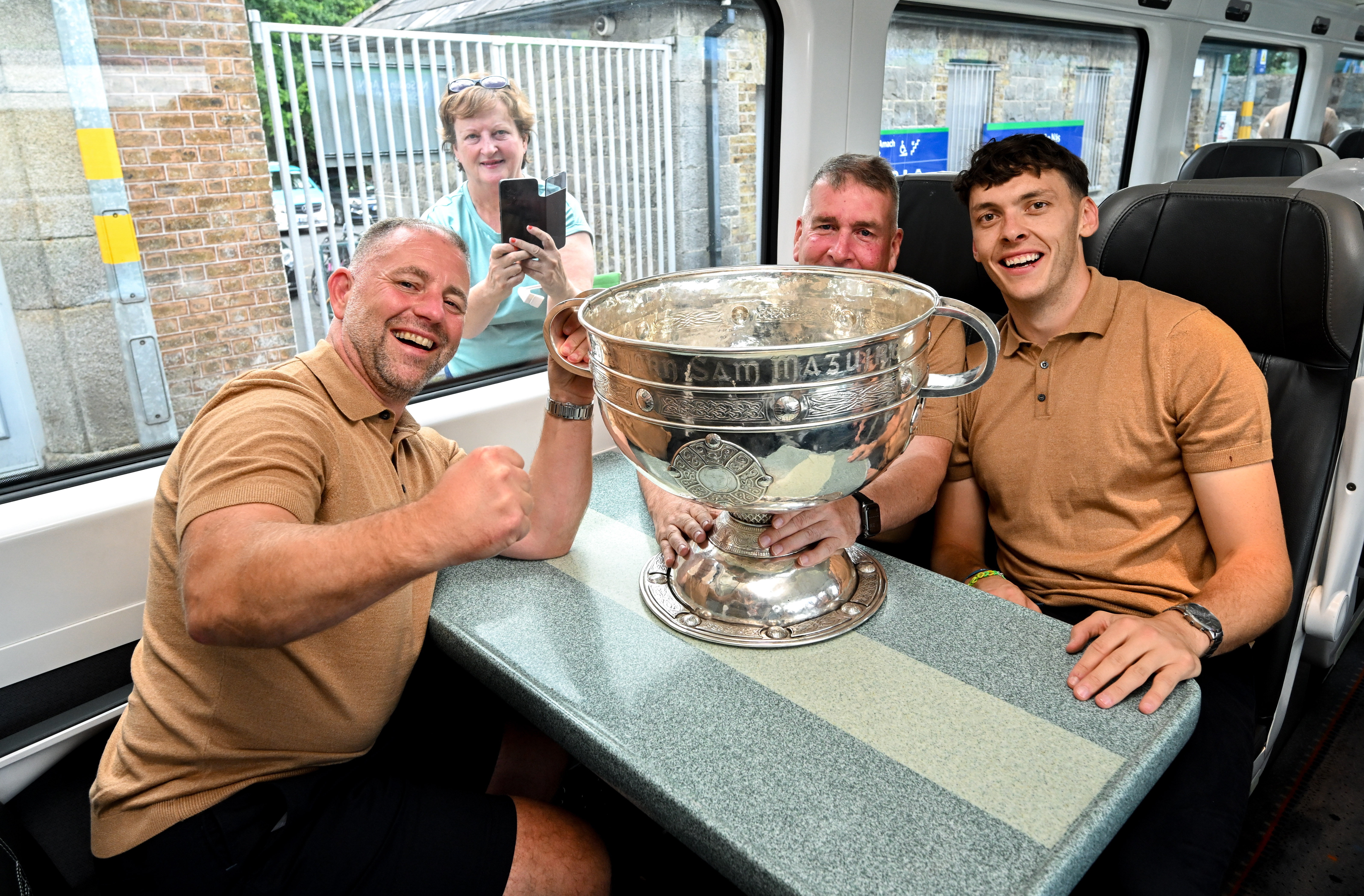
TAKING HOME THE SILVER…Jason McGahan, pictured with Kerry Chairman Patrick O’Sullivan and David Clifford as they took Sam back to Kerry last season
MMcM: Is the recent influx of ACL injuries a concern, or is just a recency bias and a freak period? There are a lot of them.
JMcG: From a cohort of 1,891 GAA players last year, 62.7 per cent of ACL injuries come from non-contact, 16.1 from in direct contact with 21.2 from direct contact. It comes from changing direction, single leg loading, all that has got a major part to play in it There is the fatigue element, you might be looking at the recent research a lot of these injuries are coming towards the end of games. I think 70 per cent of nearly all ACLs are happening during a game and we’re playing more games. It’s eight-fold in terms of there being more chance of an ACL injury during a game. That lends to the question. Are we preparing the athlete well enough for the game, to match the demands of the game, not just physically, but mentally?
MMcM: Is that a case of preparing players fully for game situations?
JMcG: We have to start looking if they are properly conditioned for the game. You may put an ACL program in place, but is that training you for the mental aspect of the game? Is it really producing serious enough fatigue, decision making, reactive cutting or competition in the program that you’ll get in the game? We have to look at our conditioning but you can’t really compare it with soccer or rugby.
MMcM: Is the main difference between the inter-county GAA player and someone in soccer or rugby the fact they’ve time to recover. You touched on sleep and proper nutrition. The professional has recovery as part of their week.
JMcG: The GAA player has excess stress, work stress or academic stress to add to it. Then you have the pressure to succeed, that may lead to more psychological overload and burnout. On top of that, they’ve got unrealistic expectations placed on them. They have to try and keep everybody happy. You have to look at both the physical and psychological stressors that are often excessive and unnecessary.
MMcM: Jason, thanks for the chat. Is there is anything else you feel is relevant that is important to highlight?
JMcG: I think there needs to be more work looked at the mental side of the game. Unless we start looking at the internal stressors of these players, we won’t get a good reflection of what has been done. Croke Park are carrying out research at the minute around ACLs and GPS. What about the internal stressors of the athletes? The big one is metabolic, the physiology of your heart rate. Are we doing enough work around heart rate monitoring, to build on the research Shane Malone has done? A simple RPE scale (Rate of Perceived Effort) that we used in part of my PhD. I could have a training session and the GPS will tell you that it’s over 4km but the RPE is a nine (out of 10). I would ask the player, how hard was that session out of 10 and look at how long the session was. If it was 60 minutes and their RPE score was six, then that’s a total of 360. We’ve been using it for a number of years now after introducing it with our development squad. We have started educating them how they feel. We could both run 5km, but your RPE is six and mine is nine. If we start individualising more, we’ll get a truer reflection of what that game is like.
MMcM: That’s an interesting angle.
JMcG: With the split season, the most common concerns are that we have more overuse injuries. These are chronic injuries that are constantly going over and over again. The ACL, is it connected to lower limb and other lower limb injuries. Look at tennis elbow. If you constantly hit the ball with the same hand for hours and hours, from weeks to weeks, months to months, something has to give. It’s the same with any sport. If you are kicking with your right foot all the time, there’s going to be an imbalance.
MMcM: In an ideal situation, the off season should be getting involved in something different, say swimming for example.
JMcG: Ulster Rugby will get six to eight weeks off. Of the Kerry senior squad, 76 to 78 per cent got one to two weeks off between county to club. Then, around 80 per cent of players had one or less weeks off before going from inter-county to club. You don’t need a sports scientist with a PhD to tell you that’s not going to go too well. We had 56 to 58 per cent who had played 10 games or more for Kerry that season. For the club, 76 per cent of them had played 10 or more games for the club in the championship, on top of what they did for Kerry. I contacted every county in Division One, most are max six championship games in their county at the most, if you went the distance. If we look at the Dingle and Gaeltacht boys, 37 per cent of the squad could’ve had 15 games for the county and nearly 40 per cent of them had played 15 games for the club. You won’t get that in any other county. We have never done a proper pre-season in Kerry. I’m not making that up. I have to stagger the ways to try and give them any chance, so that when they come back, they’re going to be mentally and physically fresh to start. There hasn’t been one year, since I’ve been there in 2019, where we have started the preseason with everyone. We’re trying to get out there to educate and get into clubs, trying to get people qualified in S&C. I’m hoping the penny will drop.

Receive quality journalism wherever you are, on any device. Keep up to date from the comfort of your own home with a digital subscription.
Any time | Any place | Anywhere
Get the app for the best Gaelic Life experience