


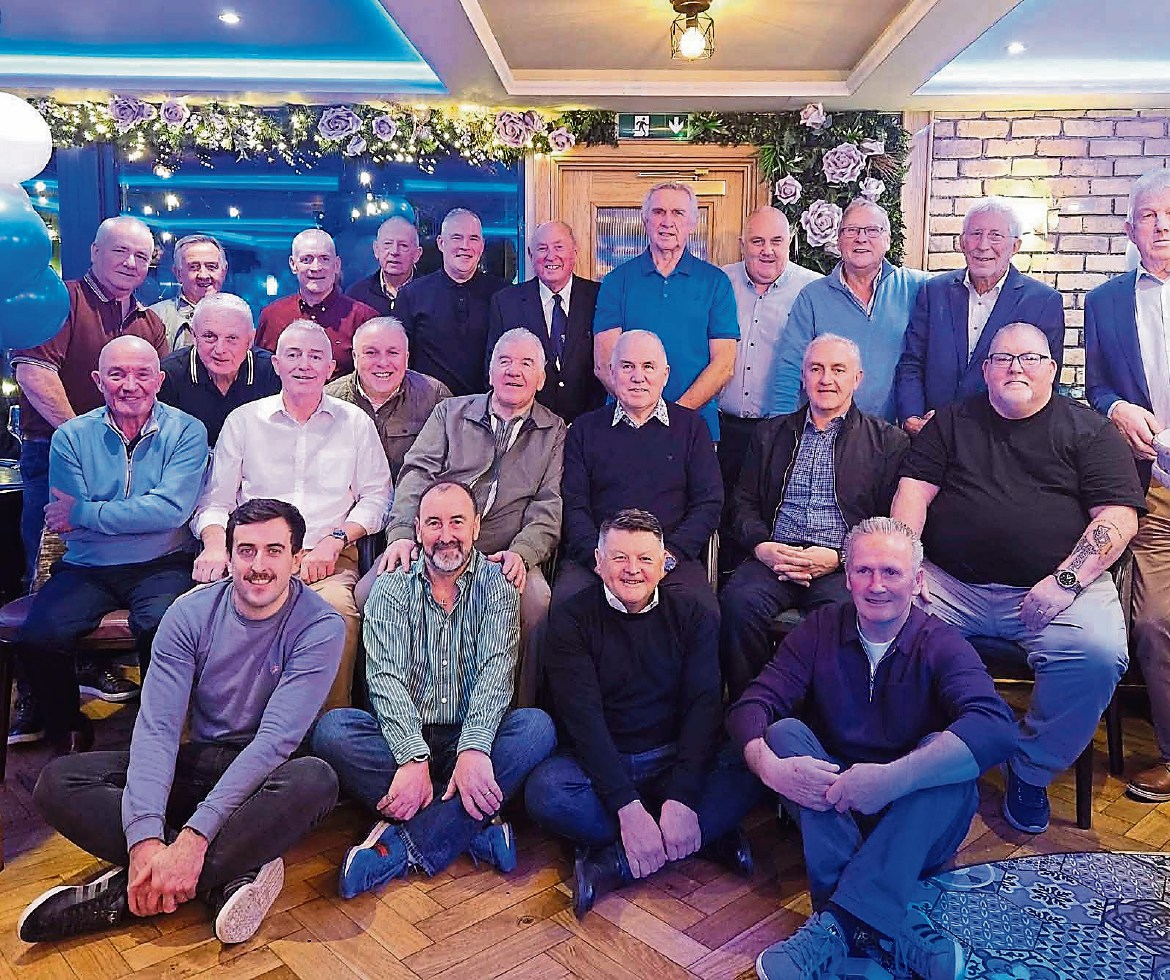


1986 was a special championship win for Bellaghy. Out of their 21 titles, that years sits on its own.
Every other championship triumph was accompanied with another within a year or two. Bellaghy are top of the Derry roll of honour having won three titles in the 50s, seven in the 60s and four in the 70s.
After that, further glory arrived in 1994, 1996, 1998, 1999, 2000 and 2005. Add in the Ulster titles in 1968, 1971, 1994 and 2000 along with the All-Ireland success of 197172.
It’s not that 1986 came out of nowhere (they also won the Kilmacud Crokes All-Ireland sevens that year), but it was the merging of the older guard from the 70s and the promising talent that would go on to dominate the 90s.
40 years on, the team had a reunion last Friday night and recalled some of the great stories and memories from their playing days. They also honour three members of the squad that have passed away since, Paddy McKernan, Damian Brown and John McErlean.
“We had been very successful from 1956 when we’d won our first and we also won the Ulster in the 60’s and then in the 70’s we won the All-Ireland,” recalled Kevin O’Neill, the goalkeeper of that team and one of the main organisers of the reunion.
“The 1986 championship was a very isolated one between the 1979 championship and the 1994 and we had a really good period for the ten years after that.
“The significance of it, the big thing was that anyone new into the panel, right from the first in 1956, had a group of boys around them that had done it before.”
The leaders in the dressing room were crucial, but so too were the young boys that really added to things that year.
“You had Peter Doherty, Kevin Doherty, Hughie McGoldrick, and big Laurence Diamond had been there a year or two before that, those boys were still there from the All-Ireland side, Sean McGoldrick was on the All-Ireland panel as well.
“They were the leaders that got everybody through. We had good young fellas like Danny (Quinn) and Damien (Cassidy) who had won everything at college level and underage county and went on to win Sam in 1993.
“You had great players like Gerry McPeake and Seamus Birt and Tony McKiernan, Paddy McKiernan, Rory Scullion, Colm McElwee, all those boys played underage football with Derry and some of them played a bit of senior as well.”
Seven years between 1979 and 1986 was a bit of a famine for the Bellaghy club at that stage. Quite often, the first hurdle was their stumbling block.
But once they got up and running, they usually came good.
“I played for Bellaghy for about 16 years and it used to be all knockout and we weren’t a great first round team. We lost a lot of first round games,” O’Neill explained.
“We were always the favourites because of the Bellaghy tradition and the players we still had, we were always the favourites at the start of the season.
“I remember we lost to Newbridge in 1984 and in 1985 we lost to Ballerin in the first round by one point. At that stage, we maybe thought the ship had sailed.
“There was no massive influx of younger players. Glenullin had won three minors, Lavey had won minors and so had Dungiven and our minors hasn’t won a championship in that six or seven year period.
“And in the league, it was split into two blocks and I think we’d only one two games in the first half of the league.”
Tommy Diamond took over as manager of the team that season. An All-Ireland Club winner, Diamond would also go on to manage Derry for a brief period. He shuffled the deck and really changed things up.
“Tommy Diamond was brought in as manager that year and Tommy experimented a lot. Gerry McPeake would have been a wing half forward and Tony McKiernan was a corner forward for Derry minors that had won the All-Ireland in 1983.
“Tommy came up with the idea to move them both to the half back line so we had a very attacking half back line and they were really good carriers of the ball.
“Big Kevin Doherty was normal a full back but he put him to centre half back with the two boys on the wing and that was the springboard for us.
“He moved Danny Quinn to full back. Tony was laughing the other night that they were never told how to mark a man, the message was more about moving the ball forward.”
Watching some of the old games back on the night of the event, O’Neill was blown away by the style of play Bellaghy had implemented.
“We were a really entertaining team to watch and it was only when we were watching the videos back, the brand of football Bellaghy played in what was generally a catch and kick era, this was a team that ran the ball.
“We had support runners and players that could see a pass forward and support it. The respect that Bellaghy had wasn’t just based on winning, it was based on a very attractive brand of football as well.”
The playing style wasn’t the only thing that O’Neill had forgotten. “It’s so long ago and nowadays, to watch it back you’d have to get it converted to DVD people have done that so they haven’t been watching these games back.
“The funny bit was, the Crossmaglen game in the first round of Ulster, there was a bit of a row broke out, length of the field stuff,” he laughed.
“But in the middle of it, a British Army helicopter flew over the pitch, not at head height but dangerously low and I had forgotten clean all about it!”
While Bellaghy were favourites for the championship most seasons, they went into the 1986 county final as underdogs.
Their opponents, Ballinderry, had won three titles on the bounce at the start of the decade and reached another final 85. They’d also won an Ulster crown in 1981.
“We were massive underdogs going into that,” O’Neill continued. “Seamus Mullan was the sports writer for the Mid Ulster Observer at that time and he wrote that there weren’t too many thinking the John McLaughlin Cup was going to Bellaghy.
“Damien Cassidy had an exceptional match. There were a lot of wides and we had a lot of play at the start of the match but we didn’t make enough of it.
“Damien was being marked by Marty Bradley who was an outstanding man-marker and Damien’s goal, it was a length of the field move and it was an awesome goal.”
Ballinderry weren’t going to lie down however and they really brought the fight towards the end of the game, quite literally.
“With 10 or 15 minutes to go, Ballinderry pulled it back to a point but then we won a penalty and Rory Scullion was the nominated penalty taker but Damien had the ball in his hands and wouldn’t give it to Rory.
“Damien hit it and it hit the bar, came down and he sprinted in and three Ballinderry boys jumped on top of him so it was another penalty.
“Rory scored the second penalty but as he came out, both he and Damien were hit off the ball, I’m not going to mention names, but it’s all on camera!
“The referee booked one of the Ballinderry players and just as they were setting up the kickout, Rory’s marker hit him and he got sent off so from the penalty was won until they hit the kickout was nearly ten minutes.”
Getting everyone back into the room together, chatting, slagging, was a special night for the group of players that brought so much joy to their club down through the years.
“When we all sat down you kind of realised that all the same people still have the same personalities. Peter Doherty was winding the young boys up, Rory Scullion as well.
“The characters they were, they’re still just the same today. Even though they are 40 years older, they just settled into the same role they had in the team and nobody had really changed.
“We were all so glad just to get seeing everybody again. There were so many great players, but more importantly, so many great friends.”