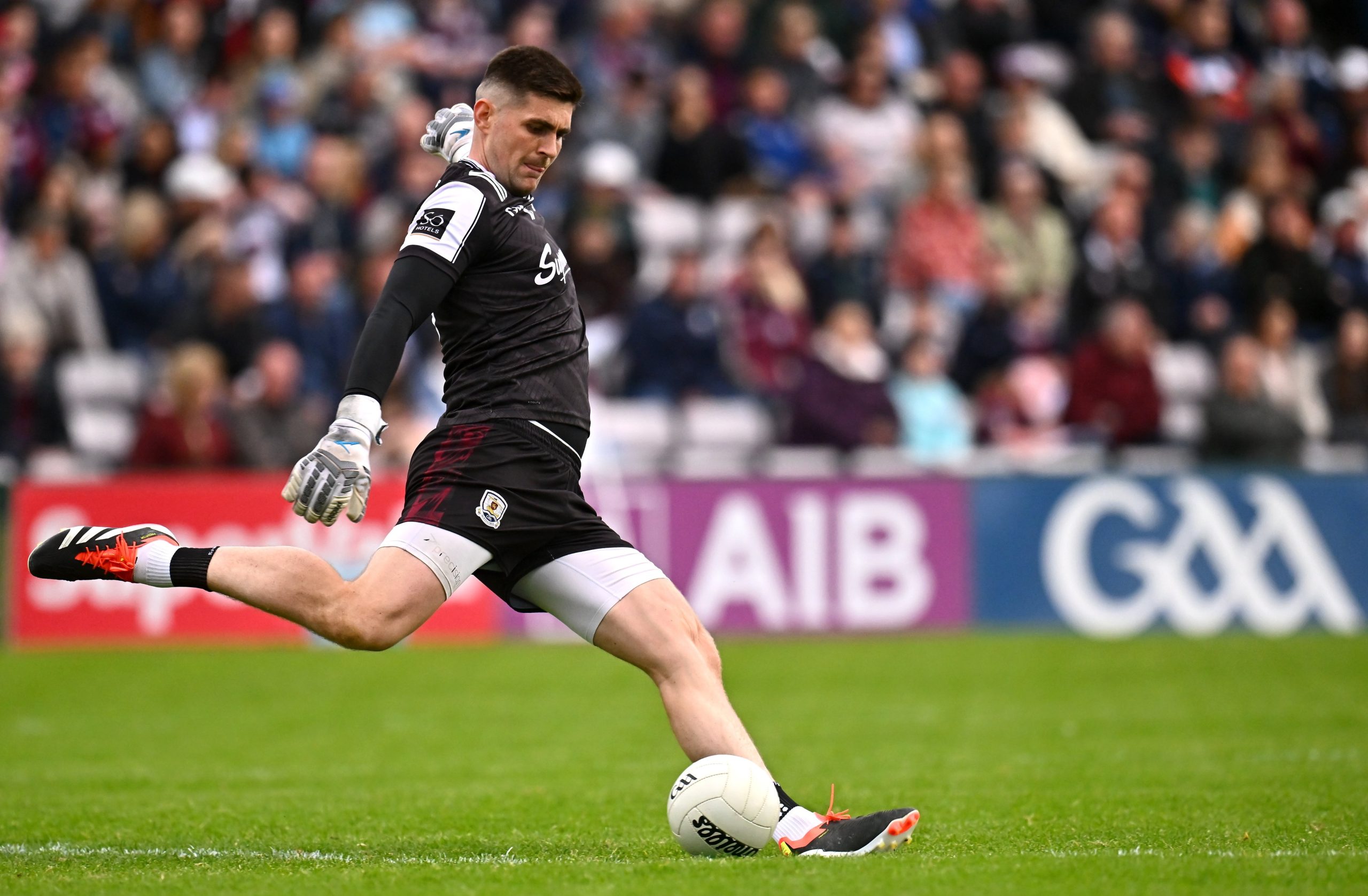


Darren Devine is a GAA Analyst and has looked back over round one of the Sam Maguire race. Michael McMullan outlines some of his key numbers.
POSSESSION is nine tenths of the law. How often have we heard it? The way football is now, it’s even more important than that.
There are two main ways to get possession – a kick-out or a turnover. With the new structure of the game, there is less and less contact, so turnovers are becoming a thing of the past.
That’s why kick-outs – now widely known as restarts – are so vital. Hence the analysis that goes into it. Teams are so well coached at keeping the ball out of traffic, that anyone getting possession from a kick-out is almost always getting a shot away.
Darren Devine is a GAA Analyst, a native of Foreglen in county Derry and his nuggets have been very interesting on his social media posts during the season.
After digging through all eight of the All-Ireland SFC games to date, including Cavan and Westmeath going to extra-time, that’s 580 minutes.
He looks into the million-dollar question – is it better to go short or long from a kick-out? Darren has taken an extensive look.
There have been 418 kick-outs, that’s an average of 52 per game, so 26 per goalkeeper. Of those kick-outs, 311 went long, as in the ball travelled beyond the 45-metre line.
The other 107 are termed as short, those pokes to a spare man in pockets between the 40-metre arc and the 45-metre line.
Of the 311 long kick-outs, the goalkeeper found a teammate 59 per cent of the time. Naturally enough, the kick-outs that ‘keepers got off short had a higher success rate, 88 per cent.
In terms of getting a score, from retained kick-outs, there wasn’t much difference. The 46 per cent for retained long kick-outs is three more than the short variety.
The difference is where short kick-outs go wrong and don’t find a man. If a team loses a long kick-out, around the middle of the field, there is a 42 per cent chance of conceding a score.
That swells to 77 per cent for the short kick-out lost. The Blaine Hughes pop to the right corner back position Lachlan Murray cut out last weekend to score his goal being an example.
Based on Darren’s numbers, from the sample size in question, for every 100 long kick-outs, the expected number of scores is 27.1 from those retained. The opposition team has scored an average of 17.2 scores. This leaves a net surplus of 9.9 scores.
Using the same data, the comparison is much different for every 100 short kick-outs. Across the eight All-Ireland games, there was an average of 37.8 scores for every kick-out. The scores conceded off short kick-outs lost was mush lower, 9.2. The surplus scores for 100 short kick-outs was 28.6.
In summary, short kick-outs, inside the 45-metre line, per 100 restarts, will generate 18.7 more scores than going long.
When you think a goalkeeper will have average of 25 kick-outs across a 70-minute game, this could be potentially 4.7 scores more. Enough to change a game.
There are a lot of numbers in there, but the summary is that short kick-outs generate more scores for your team. It shows why managers are looking for the goalkeeper who can pick the short pass.
Down’s Ronan Burns is the perfect example. It’s possibly why Armagh have gone for Blaine Hughes this season. It also shows the benefit Gavin Mulreaney and Shane Ryan have in that they can kick off either foot.
It gives them a better chance to vary their short restarts. It also makes it harder for teams to press. The level of detail will identify a defender perceived to be less skilled on the ball.
Coaching teams set traps, allowing someone to get a handy ball before closing in, often in numbers. Once the short ball goes, they are swarmed and often close to the sideline where the actual boundary acts as a line of defenders on the other side.
Even though losing a short kickout is extremely costly – a 77 per cent opposition scoring rate – you lose so few of them (12 per cent) that the overall net outcome is still much better.
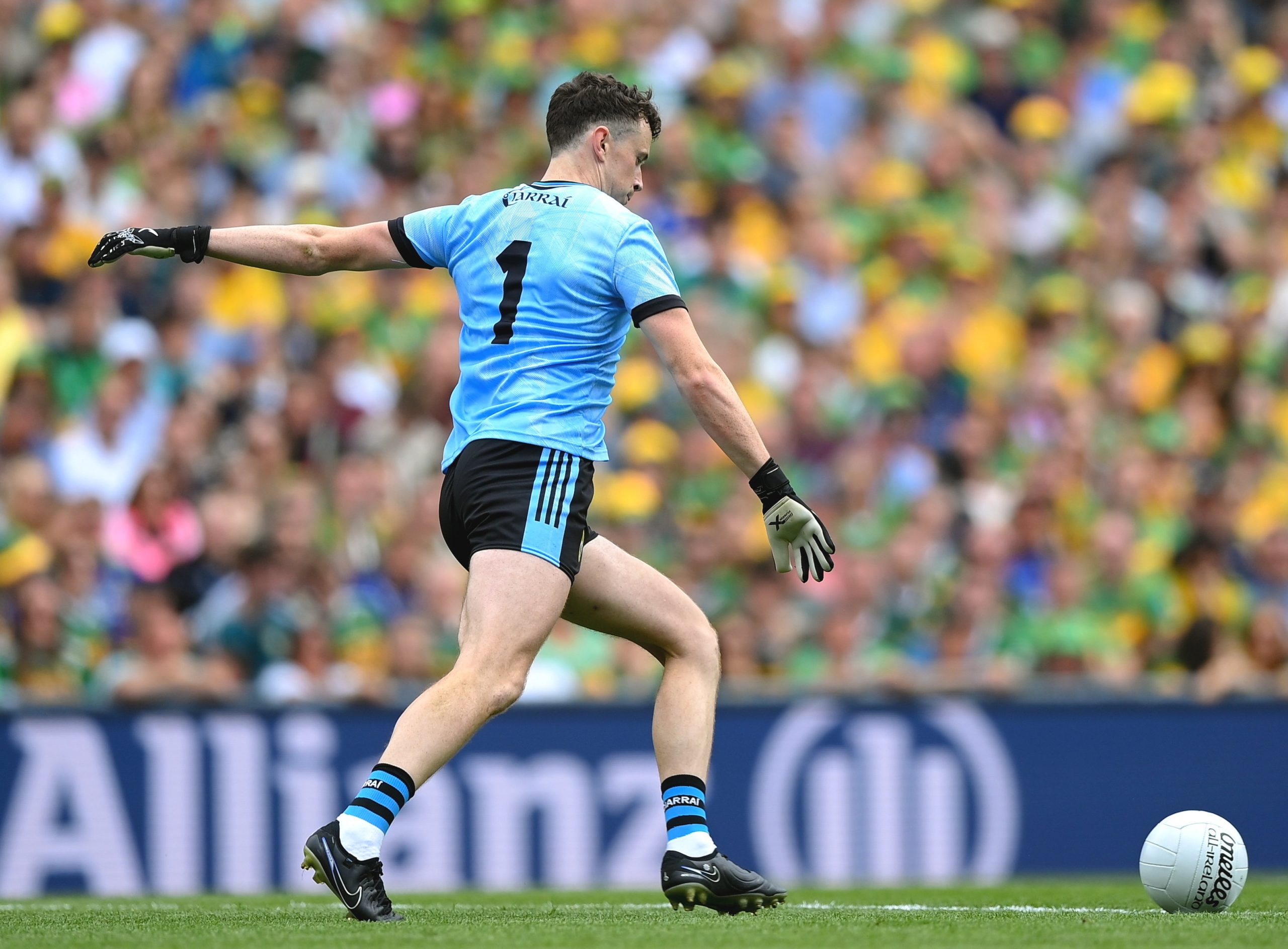
From the games analysed, the data points to the importance of retaining at least 59 per cent of your own kick-outs. Six out of every 10. How many fielders have you? What is the positioning like on the scrap for a breaking ball?
That’s why shorts are valuable but it depends on a number of variables. How fast can your ‘keeper get the ball to the tee? How well versed are the opponents on the press? What if there is a stray ball on the pitch and it delays the restart.
After a free, the opponents already have a chance to get their players in position.
The three teams from the Round 1 findings with a long kickout retention of 50 per cent or less were Derry (48), Kildare (43) and Louth (50).
This left Louth and Kildare going short 33 per cent of the time.
Louth scored six times from the nine restarts Niall McDonnell retained. Dublin failed to score with the one Louth short they overturned, leaving them a net of gain of six scores.
Kildare retained all eight of their short kick-outs but only scored from one of them in their defeat against Galway.
They did miss four shots on top of that score. The only one they turned over was beyond
the opposition 45, away from danger.
This was a better return than going long into Galway’s midfield skyscrapers, with just one score from their 14 long kick-outs. Galway scored three times off the Kildare long kick-outs.
In the case of Derry’s defeat to Armagh, Ciarán Meenagh’s side retained all four of their short kick-outs, scoring once.
Their shot conversion rate of 40 per cent hides how they got shots off from 10 retained long kick-outs. Looking ahead to the Meath game, the challenge will be increasing their long kick-outs retention from 48 per cent, closer to the sweet spot of 59 or above.
It proves the importance of kick-outs and that it’s not just an overused facet of analysis.
•Check Darren’s work on X @DarrenDevine92
Looking back over the league and championship, here are some stats from the teams in the All-Ireland race. The number in brackets represents the two-point frees included in the total.
Two pointers (Counties): Mayo 39 (12), Meath 38 (12), Monaghan 36 (12), Cork 33 (5), Kerry 32 (10), Donegal 31 (9), Galway 30 (5), Louth 30 (7), Roscommon 27 (8), Armagh 24 (7), Dublin 23 (4), Derry 23 (6), Kildare 23 (7), Westmeath 22 (7), Cavan 22 (10) and Tyrone 15 (2)
Two pointers (players): Steven Sherlock 16 (4), Diarmuid Murtagh 13 (6), Sam Mulroy 13 (7), David Clifford 12 (3), Ryan O’Donoghue 11 (7), Michael Langan 10 (1), Sean O’Shea 10 (6), Rory Beggan 10 (all frees), Ruairi Kinsella 9 (all from play) and Sean Brennan 9 (all frees)
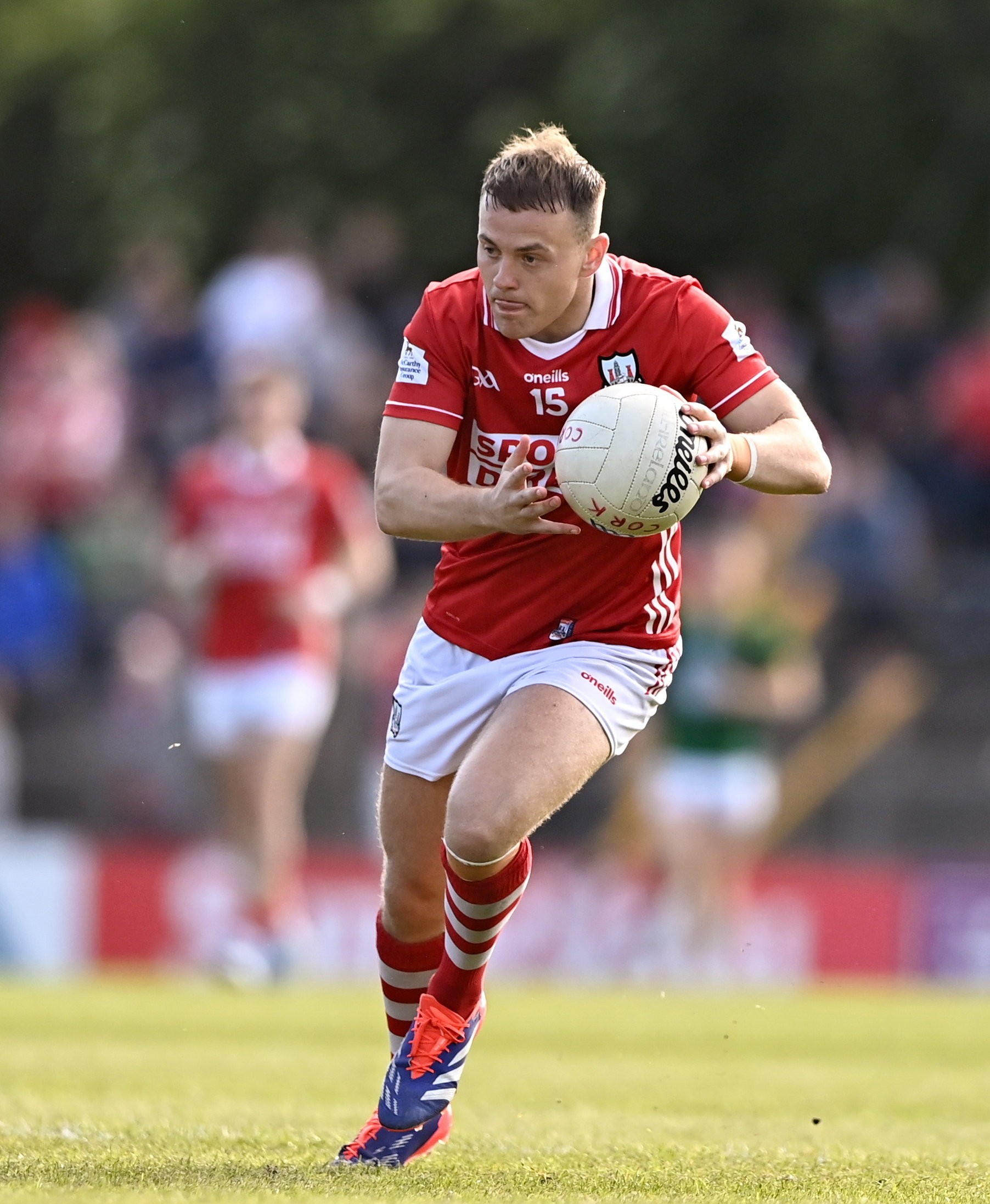
KICKING KING…Steven Sherlock has scored 16 two-pointers this season
Top scorers: Steven Sherlock 0-78, David Clifford 6-57, Diarmuid Murtagh 5-57, Sam Mulroy 3-55, Shane McGuigan 1-63, Ryan O’Donoghue 2-56, Oisin O’Neill 3-50, Luke Loughlin 5-57, Robert Finnerty 3-48 and Chris Óg Jones 6-29
Top scorers from play: David Clifford 5-44, Diarmuid Murtagh 5-29, Steven Sherlock 0-43, Conor Turbitt 3-33, Robert Finnerty 2-34, Shane McGuigan 1-36, Jordan Morris, Ruairi Kinsella both 2-31, Lachlan Murray 4-23, Daire Cregg, Paddy Small both 2-28 and Oisin O’Neill 3-25
Goals scored: Roscommon 27, Westmeath 26, Cork 17, Galway, Derry both 15, Armagh, Donegal, Kerry, Mayo all 14, Meath and Cavan both 12
Goals scored: David Clifford, Chris Óg Jones, Enda Smith all 6, Diarmuid Murtagh, Darragh Heneghan, Luke Loughlin both 5, Lachlan Murray, Niall Loughlin, Shea Malone and Conor O’Donnell all 4.
Receive quality journalism wherever you are, on any device. Keep up to date from the comfort of your own home with a digital subscription.
Any time | Any place | Anywhere
Get the app for the best Gaelic Life experience