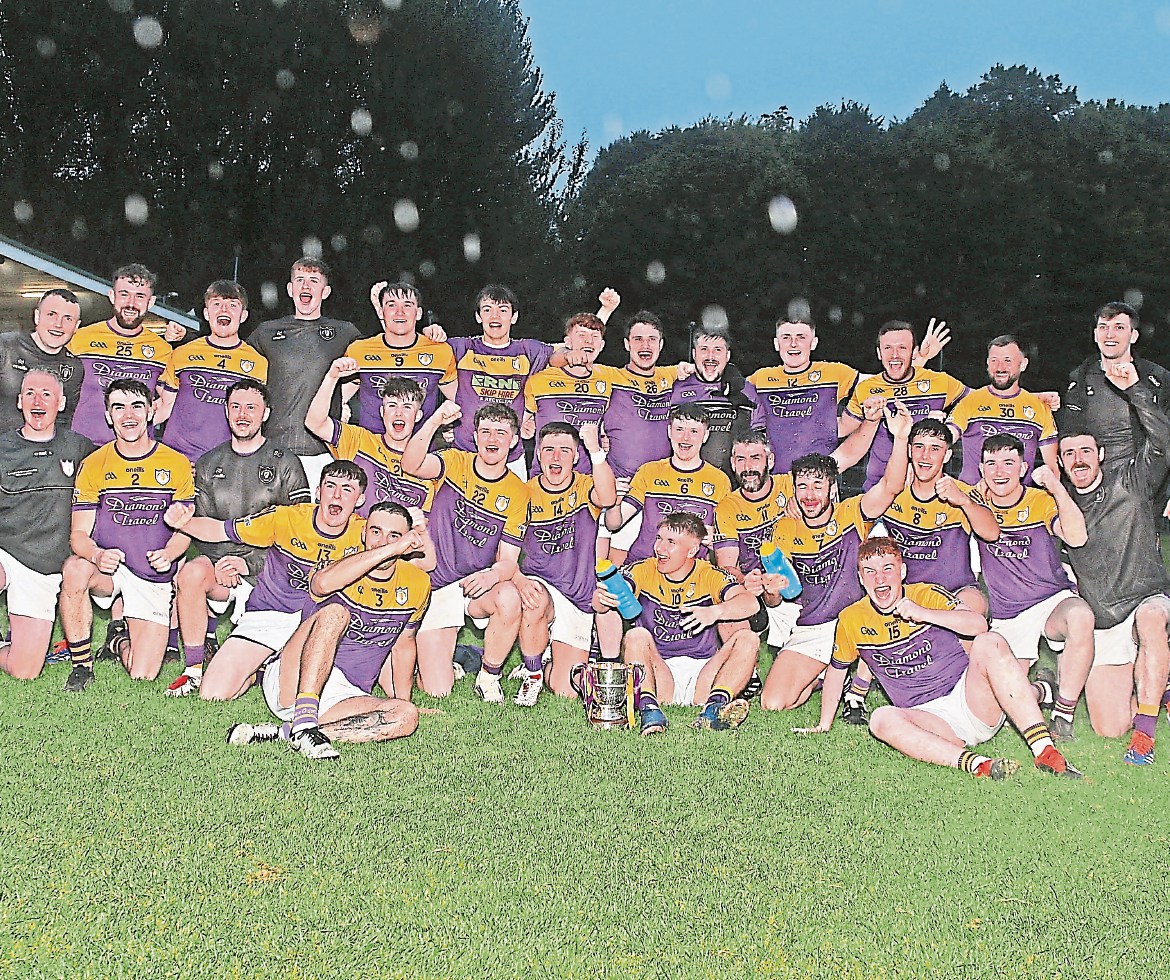


There is a range of how seriously reserve football is taken across Ulster. Michael McMullan looked at the figures and the feedback
HOW often have we heard the statement that only a small percent players make it to the heights of inter-county senior.
For a considerable chunk of the majority, they never even get to play at senior club level.
That said, we always tell each other that the club environment is the beating heart of the GAA.
It should be. However, slowly but surely, reserve football has been sleepwalking down a dangerous path towards non-existence.
The split-season gives our elite players the chance to focus fully on the county before they go all in with their club.
The split-season is brilliant for the top club player. They now have a fixture proper fixture list. Holidays and live can be planned.
For the club reserve player, it is different. If a club has a host of county players, which is often the case in dual counties, the better ones will become ‘senior’ players for half the season.
It leaves clubs scraping to field reserve teams. When that becomes impossible, games are conceded and a cohort don’t get football.
Club isn’t the lifeblood any more. Can we blame players for stepping away? Not really.
If a soccer or rugby team can offer them a game every week, that’s a choice they’ll have to make. There is also the emergence of the recreational reserve teams.
The games are never called off and there is often a cooler box of beer after the game. What’s not to love about that?
It highlights the importance everyone rightly places on digging deep into why reserve football needs to be a priority.
We received comments and shared experiences from players all over Ulster. Most highlighted the same points. Many of them didn’t want to be interviewed but felt their take was important.
David McGreevey, co-founder and current Development Officer of one of Ulster’s newest clubs, East Belfast, reached out to us.
He sees success as not just measured in cups but in player retention.
“Reserve football is not a side issue,” he said. “It is essential if counties want to turn growth into long-term participation.”
Every player pays the same membership fee and deserves meaningful games.
“We have found that around 10 games is the magic number,” he said. “If lads get 10 proper games, they come back.”
Clubs shouldn’t be centred around the manager of the senior team. Club committees have a responsibility towards everyone.
“The goal should be fewer ghost teams and more real games,” McGreevy adds.
“East Belfast is not better run than a rural club. The big difference is chimney pots.”
Their 120 players across four adult teams, while brilliant, demands a responsibility to get everyone a game.
It’s a point that is relevant in every nook and cranny.
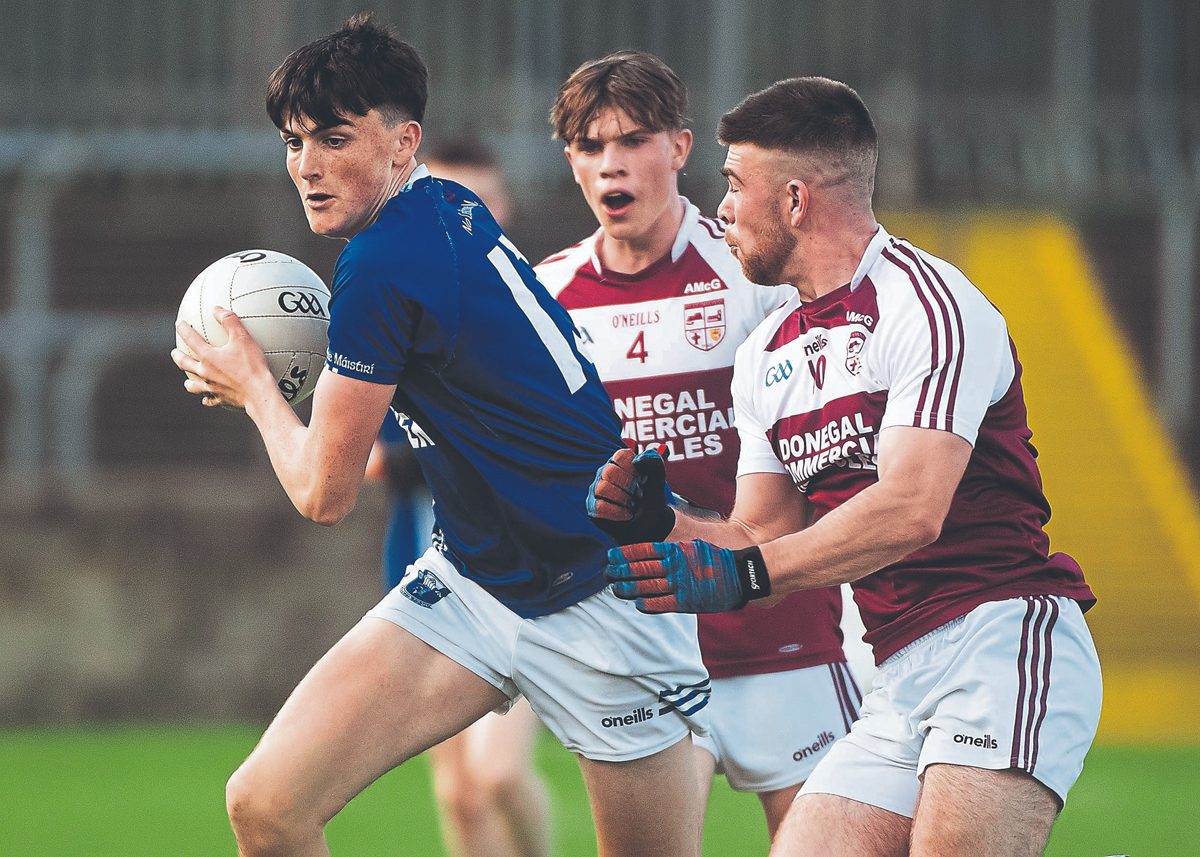
TAKE HIM ON…Conor Meehan of Four Masters takes on Termon’s Marty Steele
The club with 40 adult players and two teams must ensure there are two games every week. The principle is the same.
“The future is very bright for Gaelic games, but growth has to be managed properly,” McGreevy summed up. Give them games or they’ll drift away.
While East Belfast is only six years in existence, their points are very valid.
Cavan lead the way in our survey across the top two reserve divisions in the counties of Ulster.
They used to have a problem with high concession of reserve games. They brought in a new rule where a club would forfeit home advantage if they conceded a reserve game.
Last weekend Ballinagh reserves hosted Killygarry in a refixture from earlier in the season.
In most other counties it would’ve been let slide. Not in Cavan. Killygarry had nothing to play for but would’ve risked losing home advantage by conceding. For Ballinagh, they needed to win to avoid relegation.
Unsurprisingly, Tyrone’s two top reserve league are highest in terms of fixed games played.
Derry are at the bottom but there is a caveat to their figures.
Of the 79 Division One reserve games that have refixed, 17 have been conceded. Three have been refixed. Six have been unaccounted for.
Lavey are one of the contenders for the senior title but conceded their first six reserve games. With the volume of players representing Derry at U20 and senior level – football and hurling – it’s no wonder.
When you add in injuries and other elements, that’s over 20 players unavailable most weeks until their players’ county involvement ended.
Steelstown have only played four games, two of them away to Loup and Ballinderry – the entire length of the county. Four times, they were awarded the points due to concessions.
As the only senior club in Derry City, four games doesn’t spell a development bridge to their senior team.
In Derry’s second tier, only 50 per cent of the reserve games have been played. There is an anomaly in that figure too.
Lissan and Slaughtmanus have conceded 14 games between then, but they have been playing junior football in Derry in recent years where clubs don’t have a reserve teams.
Every county is different. Derry have to deal with both dual clubs and county teams that are picked from too small a pool of clubs.
The Cavan rule won’t work there. It takes a deeper dig. It’s a tough one but, as David McGreevy has pointed out, it’s a very important one.
If a club in Cavan is a couple of players short to play a reserve game, an SOS goes out and they’ll have enough. The game gets played. The result is irrelevant. This is what participation is about.
Michéal McCarville is now a regular Monaghan footballer. He was five years out of minor but still couldn’t get a place on the Scotstown senior team.
Winning a 2018 reserve championship pushed him deeper into the senior plans the following year.
Scotstown reserves have three unplayed reserve games to their name this year. They are postponed rather than conceded.
When the county contingent return and numbers are more plentiful, they’ll get them played. The next Michéal McCarville is just as important as the current one.
In most counties, reserve games are often 13-a-side anyway, unless both agree on 15. In Antrim, it can drop to 11. Their Friday night games have worked well.
A club in Derry felt the pinch earlier this season. With just 11 reserves, they brought in eight minors.
Four played a half each, which was agreed with the minor manager as Derry’s minor games are on a Monday night.
A longer-term solution may be U14 games swapped to a Monday so minors are an option to pull out reserve managers.
Younger than that, the GAA could consider counties being allowed to write in a new bylaw.
For example, a club can play two U17 players – providing the opposition agrees – to help fulfil a reserve game.
It’s not an option for senior. It’s merely a means of getting 11 players a game who are training twice a week.
There is also a debate about when reserve games take place. In an ideal world, they are played before a senior game.
With supporters arriving early for the senior game, reserve players feel valued.
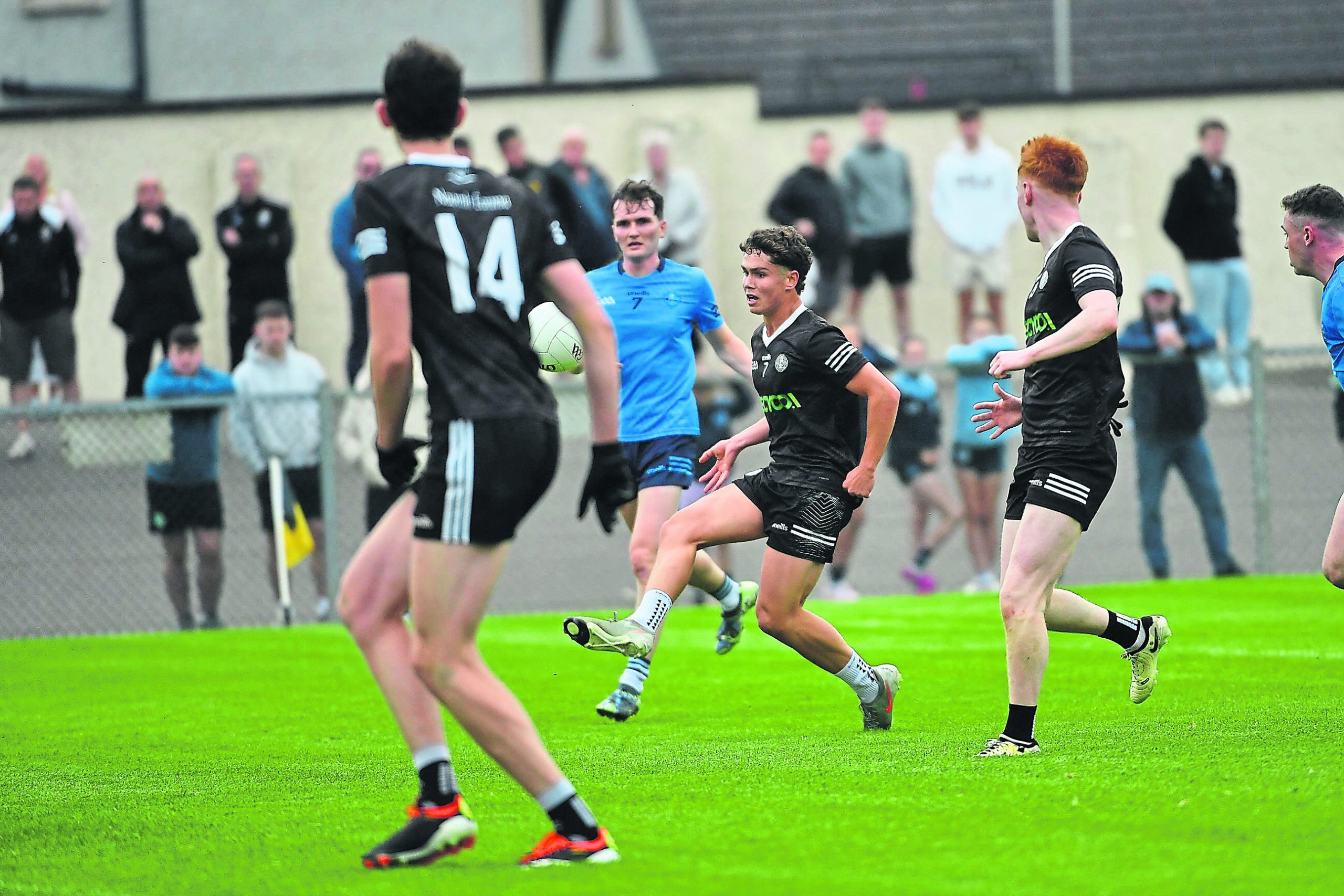
NET GAINS…Omagh’s Ronan McGrath chips the ball over the Killyclogher defence and ‘keeper to find the net
With senior managers wanting to keep 18 players fresh, it can leave numbers tight. A solution is often playing the senior game first. It’s far from ideal but at least everyone gets kicking ball.
There is also the idea of playing senior and reserve games on a separate day.
There are two sides to it. It gives a better chance of fielding teams but there is also the scenario where fringe senior players having two gamedays on top of two training nights.
A solution is that the coach can train the starting 15 seniors for a Sunday on the Friday night. While that’s happening, the senior manager oversees the Friday reserve game, telling them the best five players will be on the senior bench.
In the main, it can be difficult to co-ordinate but it all comes back to the same point. Every situation
is different.
In Donegal, a few points have come up. Some Division Two clubs who are struggling for numbers enter their reserve team in the Division Three reserve league.
It’s not as serious and it’s easier to get a few older hands to turn out every week to make sure the reserves who need a game get one. Then, in the championship, the reserves play in their ‘proper’ division.
On the flipside, there is also grounds for dividing Donegal’s reserve league into regions – north and south, especially if there is a scenario with senior and reserve games.
In Fermanagh, there will be a change next year to five divisions, including all senior, reserve teams and in some cases third teams.
That’s the way it is in Cavan where reserve teams are in Division Five and downwards, and can gain promotion to play against club’s first teams in divisions above them. It’s something former St Eunan’s Chairman John Haran feels should come into Donegal.
In a counter argument, others in the county feel it then pushes smaller clubs further down the pecking order.
It has been something that has also came up in Armagh where clubs had entered their seconds team in the junior league.
In recent years, Clann Éireann’s second team won the Junior Championship but were unable to play in Ulster so Ballyhegan took their place.
A motion at the Armagh AGM last year was passed, preventing this from now happening.
This season, many of the leading clubs have their reserve team now playing in a separate Junior B league.
The rest of the clubs competed the Reserve League played across three divisions – South, Mid and North. The semi-finals took place this week.
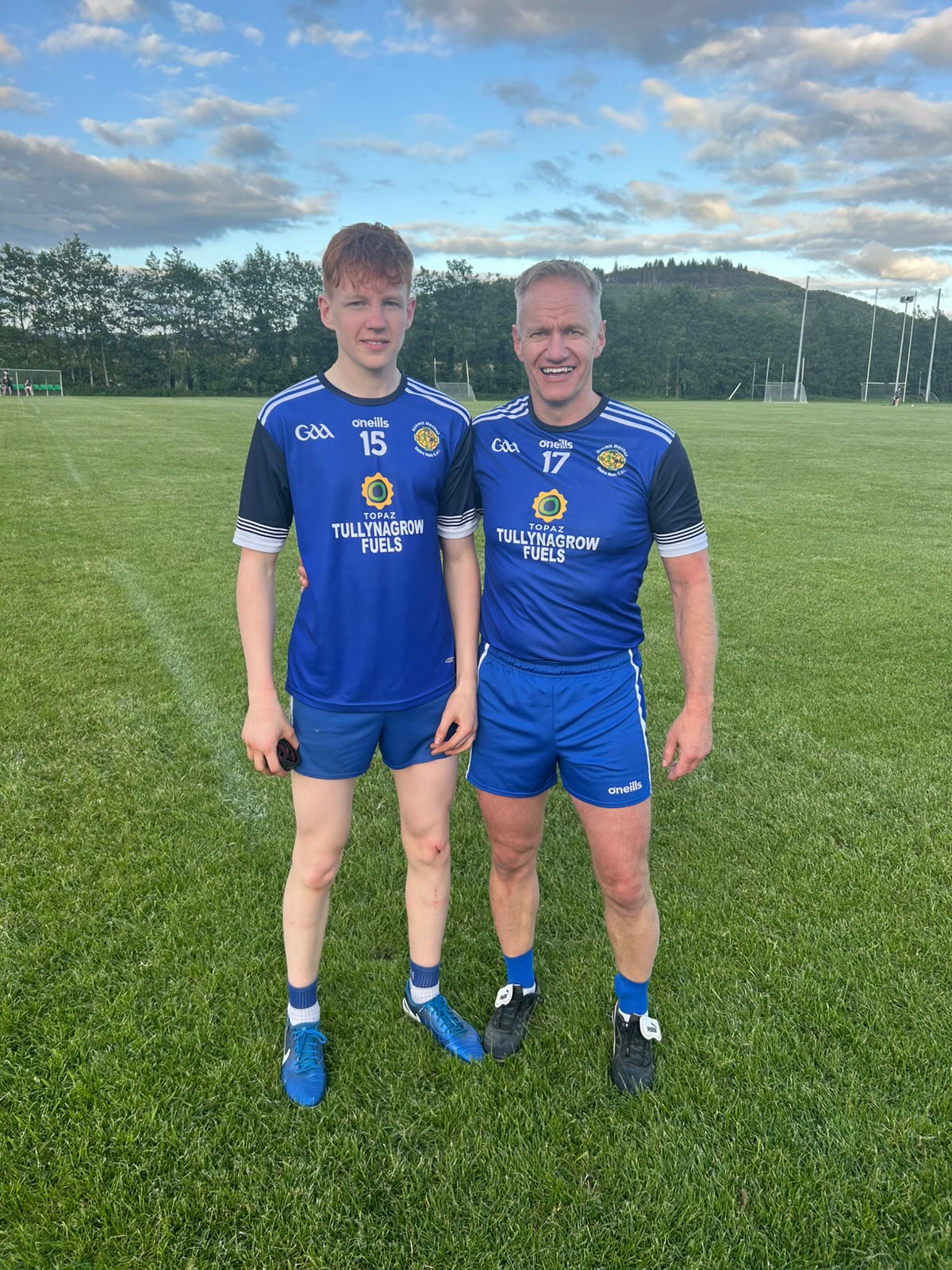
GENERATION GAME,,,Sean Óg Woods lined line out alongside his father Niall in Derrynoose’s reserve team
There is another side to reserve football. Derrynoose played Forkhill last week.
Sean Óg Woods scored a point in the game – he’s a cub making his way after underage.
When he won a penalty, it was his father Niall who supplied the pass and later scored a point himself.
They posed for a photo after the game. It shows the value of playing a community-based sport. Ireland is littered with such examples.
At the other side of the world, there is now a reserve league in parts of Australia. It highlights the number of Gaels who have left our shores.
Perth’s Western Shamrocks have 84 players in their group chat. So, like East Belfast, they have a responsibility to get players games. In summary, the volume of interest ahead of the penning of this article highlights the value of reserve football.
There is the concern when clubs don’t see how it is a passport to their long-term existence.
County boards face a challenge to find a fit what works in for them.
As for clubs, they too have a balance to find – between the underdeveloped 18-year-old who has the tools to play senior and the lad who just simply wants a game.
At the end of the day, the membership fee is the same. Everyone is important. That’s the crux of the debate.
- Have you any thoughts? Get in touch – [email protected]
A BREAKDOWN of reserve football. We delved into the top two reserve leagues in all nine Ulster counties.
ARMAGH
RESERVE football has two separate entities. Many of the leading clubs play in the Junior B League.
Some of the clubs had been putting their seconds teams into the Junior League and Championship. That is no longer the case after it was voted out at the county AGM.
The rest play in the Reserve League which is then divided into three regions – North, Mid and South Armagh. Across the 70 games in the three groups, 57 were played.
In the Junior B league, 42 games have been played so far, five have not took place, with two refixed.
Following a rule that three concessions will have implications, Clan na Gael II have with prevented from playing in the championship.
ANTRIM
THERE were 28 games played in Division One, three conceded with five postponed.
In Division Two, 35 games were played, seven were conceded and three were postponed.
Reserve games are played on Friday nights as standalone games with senior then Wednesdays or at the weekend.
Like many counties, games can be played 13-a-side. Clubs can use two graded senior players but will be fined £150 for each concession.
CAVAN
DIVISION Five is the top reserve division with the second group of reserve teams playing in Division Six. There are have been no concessions this year in any of the two divisions.
There is a new rule that any club conceding a reserve game will lose home advantage for a senior game. Reserve and senior league games are played on separate days.
DERRY
IN the Division One Reserve League, 53 games were played, 17 were conceded and three have been refixed for later. Six games are unaccounted for.
In Division Two, 30 games have been played, 24 conceded with six games not accounted for. Only Faughanvale played all 10 rounds to date.
In Division One, Lavey conceded six games before playing the next three. This highlights the number of players tied up with county senior and U20 – both codes – that depleted their senior team.
In Division Two, Lissan and Slaughtmanus conceded a combined total of 14. They are clubs who have played junior football in recent years were there is no reserve league.
Derry’s senior and reserve games are arranged as double headers.
If a club concedes more than a third of their league games, they will not be eligible to enter the reserve championship. Any game conceded will mean a £100 fine.
DONEGAL
OF the 61 Division One games, 53 have been played, six have been refixed and two have not been accounted for. In the second division there have been 61 games fixed. Of that, 41 have been played, four have a refixed date and 16 are not showing in up the fixtures section of the Donegal website. The system doesn’t show conceded games but they cost a club a €200 fine.
DOWN
SIX of the 30 games in the Premier Reserve League Division One were conceded, one remains unplayed and the rest took place. In Division Two, 26 were played, two conceded and two not played.
Down senior games are fixed for Friday nights with the reserves played later in the weekend. In an attempt to reduce the number of concessions, Down GAA brought in a rule that any club who concedes three league games or more won’t be considered for the championship.
FERMANAGH
THERE are two levels of reserve football in the Erne Cup. In Division One, there have been 36 games fixed to date. Five have been refixed with two conceded. Division Two – which also includes Derrygonnelly Thirds – has had 45 games to date. There have been 36 played, six have been conceded and three refixed for a new date.
There was a ruling in place that any club who conceded two reserves games would not be permitted to play in the championship but it wasn’t enforced.
Fermanagh is moving to a new structure next year with five divisions of seven or eight teams.
MONAGHAN
OF the 24 games in Division 1A in the rounds of the reserve leagues in the Oriel County, 19 have been played, three have been refixed and only one conceded. Another three, involving Scotstown, have been postponed. In Division 1B, 22 have been played, none have been conceded and two have been postponed. The fine for a concession is £150 with any team failing to field three times deemed to have withdrawn from the competition. Senior and reserve games are largely played on the same night.
TYRONE
TYRONE are behind Cavan in terms of games played in their two divisions. All but two of their 60 Division One fixed games have been played. In Division Two, 64 of their 68 games have been played. In Tyrone, the senior and reserve games are played as part of a double header every week.
Please note: Figures taken from the counties’ official websites. Based on fixtures up to and including Tuesday, June 16. Not all counties have conceded games on their site.
Receive quality journalism wherever you are, on any device. Keep up to date from the comfort of your own home with a digital subscription.
Any time | Any place | Anywhere
Get the app for the best Gaelic Life experience