

By Michael McMullan
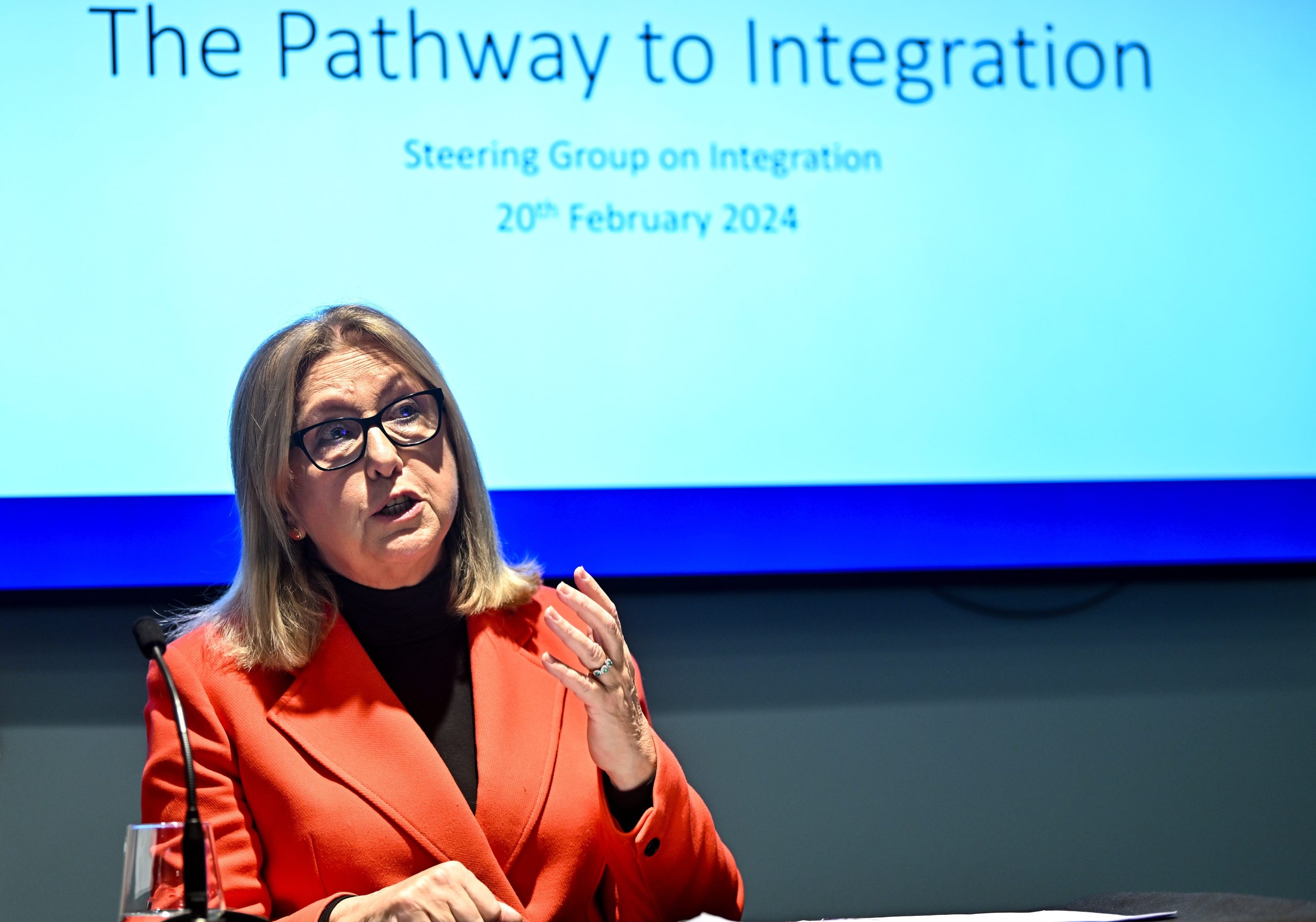
I am not privy to the inner workings of what Mary McAleese had in store for merging all members of the Gaelic Games family.
I just assumed everything was moving along until Tuesday’s bombshell, when she stood down as Chairperson of the Steering Group for Integration.
I’ll be honest. Integration is something I fully believe in but I just switched off. I trusted the process and was looking forward to a whole new united front.
There was an agreed target of 2027 but it seems the GAA now feel it’s an unrealistic one.
Incoming GAA President Derek Kent, speaking at Congress in March, indicated it would still happen in time, suggesting a new date of 2034, the GAA’s 150th anniversary.
McAleese stepped down from her position after the GAA asked for more time.
In the hours that followed on Tuesday, statements were released by the GAA, the Camogie Association, the GPA and the LGFA.
The GPA are looking answers to why the GAA goalposts have changed.
The GAA said there will be a “detailed and sequential workplan” that will be “advanced in” 2027. They are also still committed to uniting all codes.
Brian Molloy, Uachtarán of the Camogie Association, highlighted his disappointment that 2027 wasn’t going see a merger but reiterated his support for the concept.
The LGFA are also still backing integration, stressing its importance for the long-term growth of Gaelic Games for future generations.
The statements would all suggest the GAA wasn’t ready. It’s a bizarre sequence of events, given it has been on the table since 2024.
While not au fait with all the nuts and bolts, I am disappointed that we’ve hit a roadblock.
When chatting to Gaels over the last few years, it sounded like an obstacle to integration was how the GAA were bringing in the most income and that it created an imbalance.
In one sense, I can see that point, but only slightly. Attendances at the highest levels of the men’s games exceed what camogie and ladies football can bring.
I would love to see equal attendances at all four codes but it would seem the interest is not there.
While saying that, as someone who interviews players from all codes, female players have the same stories to tell. They bring their share of commitment to the table.
There are tough sessions in the rain and snow. There are knockbacks. Players get dropped. Gut-wrenching defeats. A journey back from injury is a lonely one. It’s no different to that of male players.
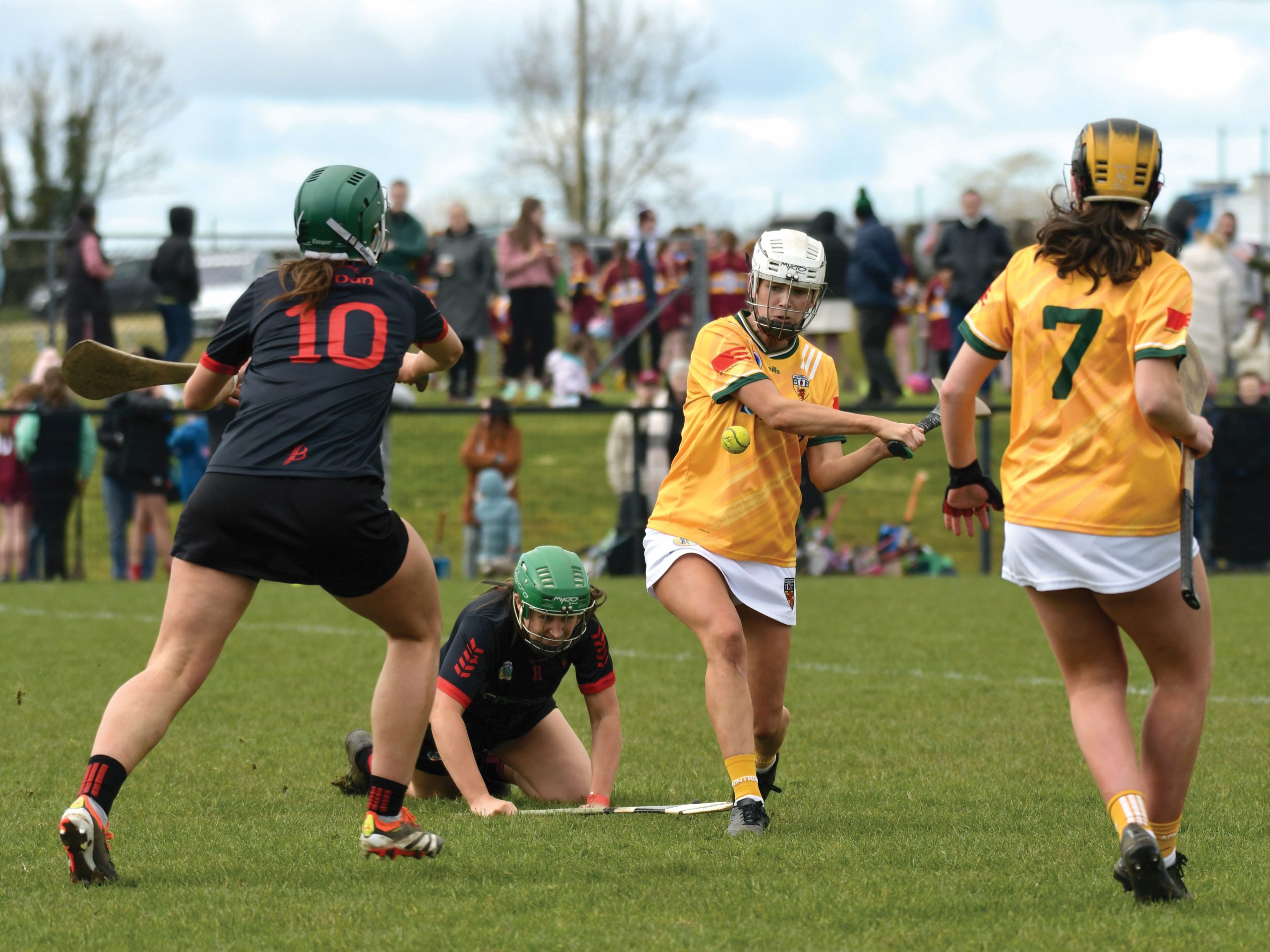
Antrim’s Nicole McAtamney takes aim at the posts. Photo: Michael Corcoran
I interviewed Antrim camogie player Nicole McAtamney last year – a married mother, mixing working as teacher with home life, while still leading the charge for Dunloy and Antrim.
I left her classroom that day with one word in my head – inspirational. I’d like someone to tell me female players over Ireland don’t deserve the same support male players get.
Just as I was finishing this piece, Antrim Camogie released a statement on the matter.
“Antrim Camogie remains committed to the vision of an integrated future for Gaelic Games. We remain willing to engage, collaborate and lead,” was a key line from a meaty statement.
A camog or a ladies footballer deserves the same level of respect. To me, that’s obvious.
They should be getting the same gear, mileage, nutrition and medical care.
Growing up in Sleacht Néill, all three codes were catered for. They’ve now added ladies football. In recent years they’ve adopted the ‘One Club’ model.
Having gone to St Patrick’s Maghera, there were opportunities to represent the school at all codes.
That was my experience, so perhaps I don’t know anything different.
For integration to happen, as much as many will disagree, there must be a unification of everything. Including funds.
The GAA, for me, is a community-based organisation. If you look into those same communities, we see the same picture being painted.
Parents will buy the same lotto ticket. Their son might be on the senior hurling team while tipping along with a bit of reserve football. Or vice versa.
A younger son could be playing U14 football and hurling. Their sisters could be playing both ladies football and camogie.
They are all different parts of a club but it’s the same grass that needs cut, the same colour of jersey on the washing line. And, don’t forget, it’s still the same pound coin to enter the lotto.
When one of the teams get to a county final, there will be power washers out and Bain Maries of piping hot food for the big breakfast. It will be the same when there is a bereavement in the community. The club will do everything for a family.
Imagine if the females decided to down tools for a year. Clubs would be poorer places.
Look at the Derry GAA handbook last year. A quarter of the top officers – Chairperson, Secretary and Treasurer – are all female. Glen were winners of the Andy Merrgian Cup in recent years, two of those posts were held by females.
Donegal is one of the counties I deal with on a regular basis. Their PRO Sineád Breen is as efficient as they come. It’s the same with Chris Keenan in Derry.
You rarely have to wait long for the response to any query from either.
For me, the most important thing is getting the best people involved. Gender doesn’t come into it.
In recent weeks, Donard McErlean has the Derry LGFA social channels all singing and dancing. It’s the same with Teresa McKenna’s input to the camogie. Their skillsets bring plenty to the roles.
For all that is positive, and if finance is the one item that prevents integration from getting across the line, it will be a sad day.
Another important reason for integration is facilities. I know they are still three different organisations at the minute, with different funding, but, for me, it’s still the overall Gaelic Games family.
You hear these disappointing stories of camogie and ladies footballers having games scheduled for the same day. This is another reason why we need integration.
I know in Derry, the CCC have senior football and hurling weeks running separately in the championship at the minute.
It allows players to play both sports. Camogie and ladies fixtures allow dual players too, so it can happen.
Imagine a situation, under an integrated association, whereby girls had the opportunity to play both codes and the county facilities are available to them.
These are the reasons why Mary McAleese stepping down on Tuesday was such a disappointment.
This can’t be the end for integration. It just can’t. We have to find a way.
Related posts:

Receive quality journalism wherever you are, on any device. Keep up to date from the comfort of your own home with a digital subscription.
Any time | Any place | Anywhere
Get the app for the best Gaelic Life experience