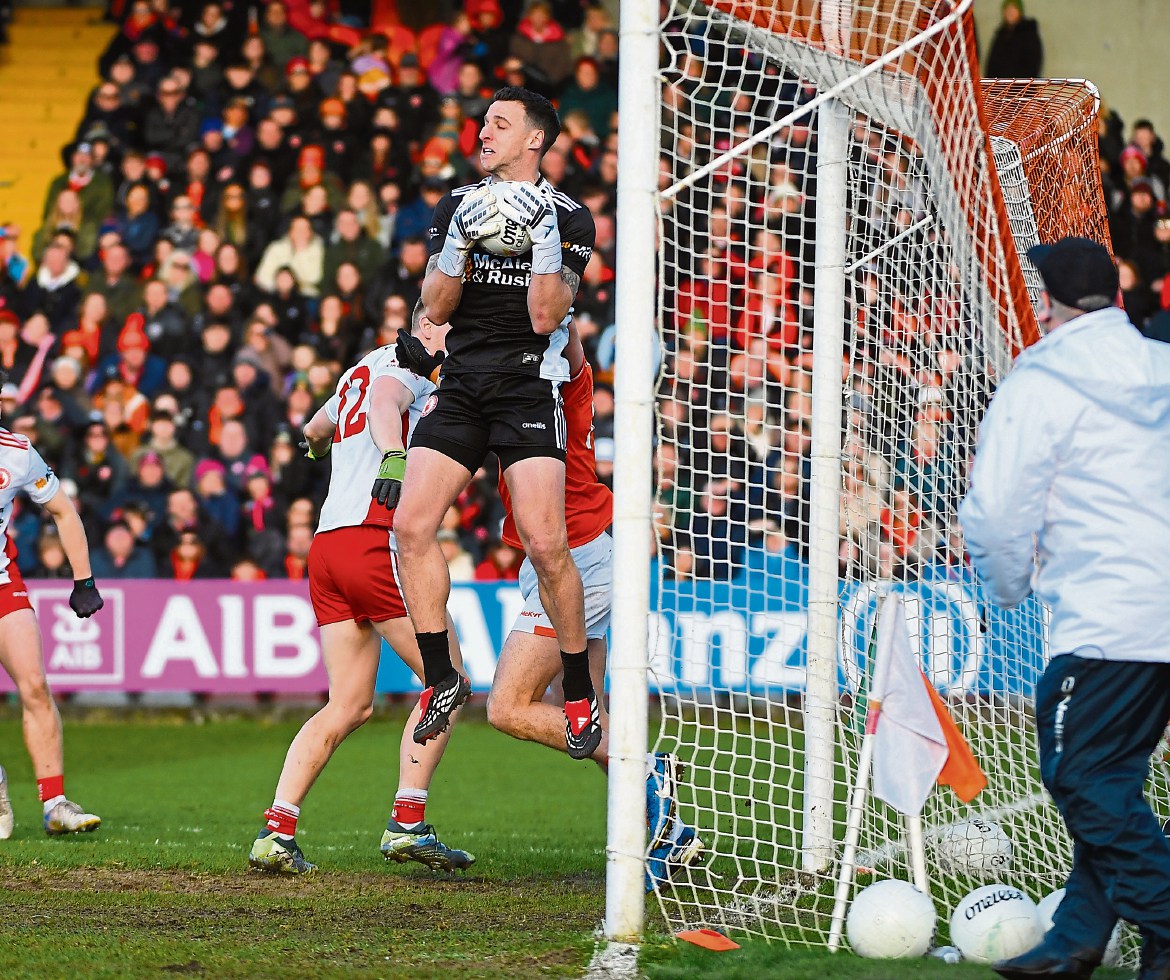


MY Levelled Progression Model is an excellent framework to use when looking to know what skills to introduce and when to introduce them. It deals with the different developmental stages of a goalkeeper in the context of their age and used correctly can massively improve the performances of any goalkeeper.
In the sixth level of my progression model, it quotes “Perfect Performance Practice Creates Consistent Perfect Performance of Critical Movements, In Critical Moments when Performing Under Competition Conditions.” Simply put this means you need to train to the level, or higher, that you expect to play at.
Whenever you are training or working on your goalkeeping performance it is vitally important that you ensure anything that you do is completely relevant to the goalkeeping position. It also needs to be comparable to the various situations that you will find yourself in come competition. Whenever you train in this way it is called ‘Deliberate Practice.’
Do not confuse Deliberate Practice with Rote Repetition – performing a skill over and over until improvement is gained. Deliberate practice involves attention, rehearsal and repetition which results in textbook skills being learnt but unlike rote repetition, they allow for these textbook skills to be developed further into multiple performance skills. This practice is then rigorously tested in a competitive environment to ensure it develops within the game itself because without testing it competitively, it fails to become a performance skill.
The deliberate practice framework purposely includes activities that are designed to improve your performance and not just the skill that you are executing. These activities are focused on performing the skills in a pressurised environment so that once you enter competition the same pressures have been previously experienced in your training, therefore allowing you to perform to your optimal levels.
When you are planning your sessions, the first step is to decide which areas of your game you wish to improve your performance of. The next step is to consider the many different environments that this area of your game is performed in, which then leads to the final step of replicating these environments on the training field and executing the skills within that environment. The purpose of this deliberate practice is to improve your performance of those skills within that competition environment turning your textbook skills into performance skills through adaptability.
Repetition
This is not to say that rote repetition does not have a place in skill acquisition, of course it does. When learning any new textbook skill, it is vitally important to perform that skill over and over until the body learns how to execute the skill autonomously. Until the skill is learnt in this way there is not much point trying to move forward to turning it into a performance skill.
My point being is that if you wish to progress your performance during competition then your practice needs to be deliberate, it needs to be focused on what you wish to improve, it needs to be measured so that your current level can be highlighted allowing you to know when you have either progressed or regressed.
To give a personal example, during the Covid lockdowns I set myself a goal of improving my left foot for kickouts. So over the twelve months of lockdown, I did nothing but complete rote practice with my left foot for kickouts from the tee. Starting at 5m, I aimed a ball towards a target and repeatedly kicked and kicked and kicked until my body became accustomed to the technique that I was trying to install.
Once I thought I was competent at five metres I would then move out to ten metres, then fifteen, twenty and so on. Over and over I practice repetitively until I was competent at taking a kickout with my left foot over forty five metres. I had learnt the textbook skill. Then lockdown ended and teams were allowed to resume collective training.
Up until then my training had been rote repetition but now back at collective training and going into training games and competitive matches my training focus switched to a more performance driven purpose. Now to transform my textbook skill of left footed kickouts into a performance skill, I needed to change my training into deliberate practice.
I did this by replicating game situations with either other goalkeepers, slalom poles and or mannequins with drop zones behind and between them as target areas. From here I was then able to progress to using my left-footed restarts during training games and then further into competitive matches.
This involve executing kickouts at various distances with my left but now I had included different difficulties and obstacles that I was required to overcome. Now I was putting my textbook skill into practice, into an environment that was going to challenge it and force it to evolve into a performance skill. This was done through, ‘Deliberate Practice.’
If you have any goalkeeping questions or queries feel free to contact me on any of the channels below.
Email:
[email protected]
Facebook: @MSoG11
X: @MorSchGk
Receive quality journalism wherever you are, on any device. Keep up to date from the comfort of your own home with a digital subscription.
Any time | Any place | Anywhere
Get the app for the best Gaelic Life experience