




When we talk about strength and conditioning with young GAA players, we often focus on getting stronger, faster and more explosive. But there’s another side of athletic development that probably doesn’t get enough attention: eccentric strength.
So, what exactly is it?
In simple terms, eccentric strength is your ability to control a movement while your muscles are lengthening. Think about a player sprinting towards the end line and having to slam on the brakes, changing direction to get away from an opponent, or jumping to win a high ball and landing safely.
All of these actions involve eccentric strength.
It’s not just about being able to produce force. It’s also about being able to absorb it and control your body when that force is coming back at you.
And this is hugely important in Gaelic football.
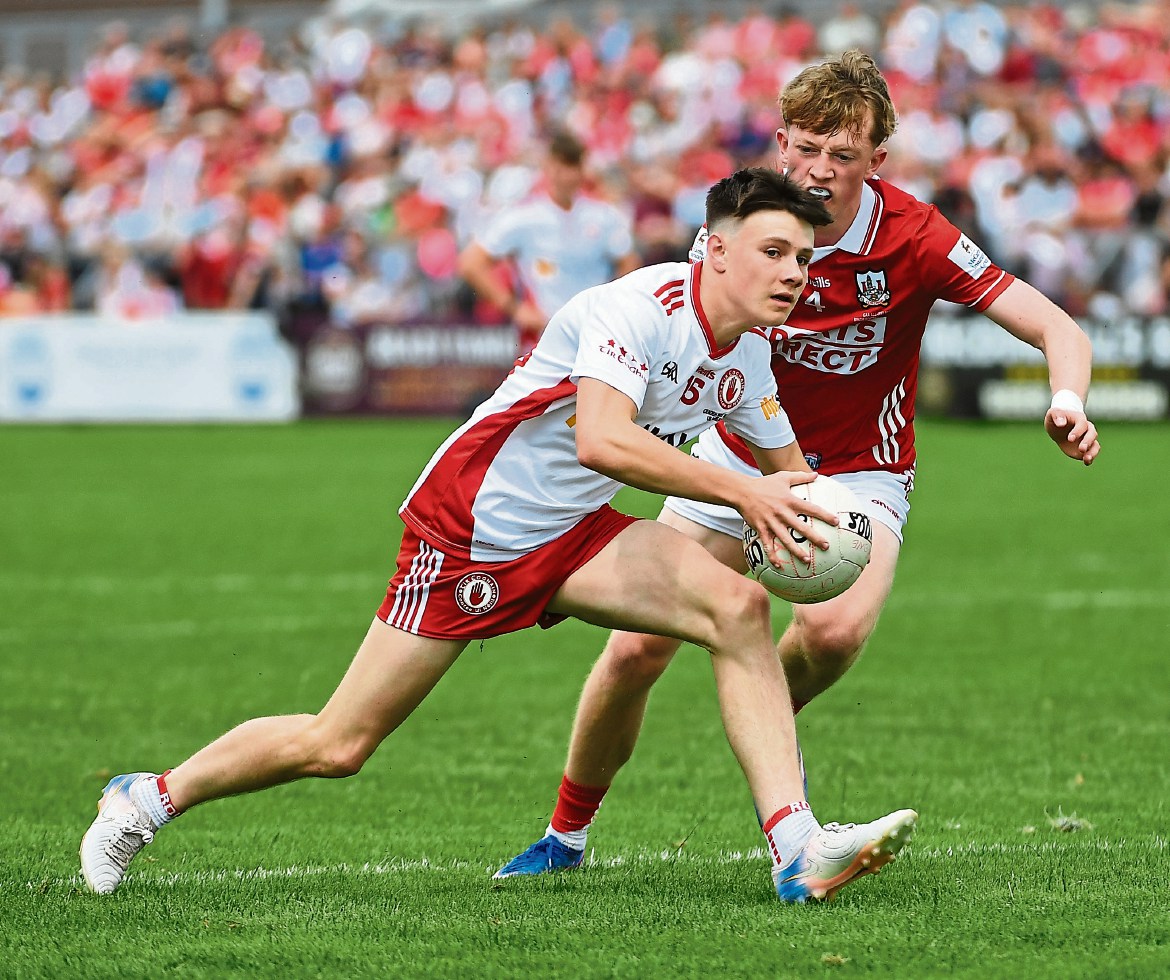
Think about how many times a young player has to accelerate, slow down, stop, turn, jump and land during a game. They’re constantly asking their bodies to absorb force. The better they become at controlling these movements, the better prepared they’ll be for the demands of the game.
So how do we actually develop it?
First things first, we don’t need to be throwing young players into
advanced exercises straight
away.
Start with the basics. Slow, controlled squats, lunges and split squats are great starting points. Teach players to lower themselves under control rather than just dropping into a position and bouncing straight back up.
From there, we can gradually increase the challenge by adding weight, introducing landing drills, hopping, jumping and eventually more demanding exercises like Nordic hamstring curls.
I like to look at it in four stages:
Build: Develop basic strength and teach players to control movements.
Load: Gradually introduce more resistance and challenge their ability to handle force.
Explode: Start working on faster movements, sprinting and braking.
Control: Develop good landing mechanics, balance and body control.
The important thing here is that not every young player should be doing the same thing.
A 13-year-old who is still developing physically will have different needs than a 17-year-old who has been training for several years. Players going through a growth spurt can sometimes become a little less coordinated, so this is a good time to focus on movement quality, landing technique and control rather than constantly increasing the difficulty.
Another thing worth mentioning is muscle soreness. Eccentric training can cause soreness, particularly when players are introduced to something new or given too much too soon. That doesn’t mean young players should avoid it. It means we need to manage the volume and progress things sensibly.
And you don’t need a fancy gym to work on this either. Bodyweight squats, lunges, simple jumping and landing drills can all be used to develop these qualities.
The biggest mistake we can make is jumping straight into advanced exercises without building the foundations first.
Remember, we don’t just want young GAA players who can run fast and jump high. We want players who can slow down, change direction, land properly and control their bodies when the game gets chaotic.
Being able to produce force is one thing. Being able to absorb and control it is just as important.