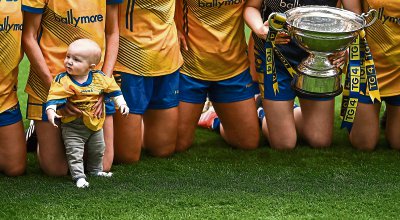


For many female Gaelic footballers, returning to the pitch after pregnancy can be an exciting goal. The desire to get the boots back on, rejoin the team and feel like an athlete again can be incredibly strong.
But one of the biggest mistakes we can make is treating pregnancy and post-partum return as simply another injury rehabilitation process.
There is no universal timeline for returning to Gaelic football after pregnancy.
Every player is different. Pregnancy, delivery, recovery, previous training history, sleep, feeding demands and individual symptoms can all influence how quickly an athlete is ready to return to training and competition.
For GAA coaches and S&C coaches, the goal should not be to ask:
“When can she play again?”
Instead, we should ask:
“What does she need to be able to do before she is ready to play again?”
Gaelic football is demanding
Gaelic football requires repeated sprinting, jumping, kicking, accelerating, decelerating, changing direction and physical contact. A player may go from jogging to an all-out sprint, jump for a high ball and then immediately turn and chase an opponent.
That means returning to football requires more than simply feeling fit.
A player needs to gradually rebuild:
l General strength
l Lower-body strength
l Core and trunk control
l Running capacity
l Sprinting ability
l Jumping and landing
l Change of direction
l Football-specific fitness
The key word is gradually.
A player may feel ready to go back running before her body is ready for repeated high-speed efforts. Likewise, she may be able to complete a gym session comfortably but still struggle with the demands of a full Gaelic football training session.
Build from the ground up
A sensible return should involve rebuilding physical capacity step by step.
This might begin with basic strength exercises, walking and low-impact aerobic work before progressing towards running, jumping and more demanding movements.
From there, the athlete can gradually progress through:
Running – Accelerating – Sprinting – Changing direction – Football drills – Training – Match play
You don’t need to rush through these stages.
The player should earn the right to progress by demonstrating that she can tolerate the previous stage.
For example, before returning to repeated sprinting, can she comfortably handle running? Before returning to full training, can she tolerate football drills and high-speed movements?
Symptoms matter
Communication is crucial.
A player should feel comfortable discussing how she is recovering and reporting any symptoms or concerns. Coaches should create an environment where asking for a modification is seen as smart, not weak.
The same session will not always be appropriate for every player.
Sleep deprivation, recovery demands and the realities of caring for a new baby can all affect training readiness. Some weeks may go smoothly. Others may require training to be adjusted.
That isn’t failure. That’s individual coaching.
The role of the GAA coach
The best return-to-play environments involve collaboration.
The player, medical professionals, physiotherapists, S&C coaches and football coaches should all work towards the same goal: helping the athlete return safely and confidently.
Most importantly, we need to remember that the goal isn’t simply to get a player back onto the pitch.
The goal is to help her return to Gaelic football physically prepared, confident and capable of staying there.
Returning after pregnancy isn’t about beating a deadline.
It’s about rebuilding the athlete, one step at a time.
Related posts:



Receive quality journalism wherever you are, on any device. Keep up to date from the comfort of your own home with a digital subscription.
Any time | Any place | Anywhere
Get the app for the best Gaelic Life experience