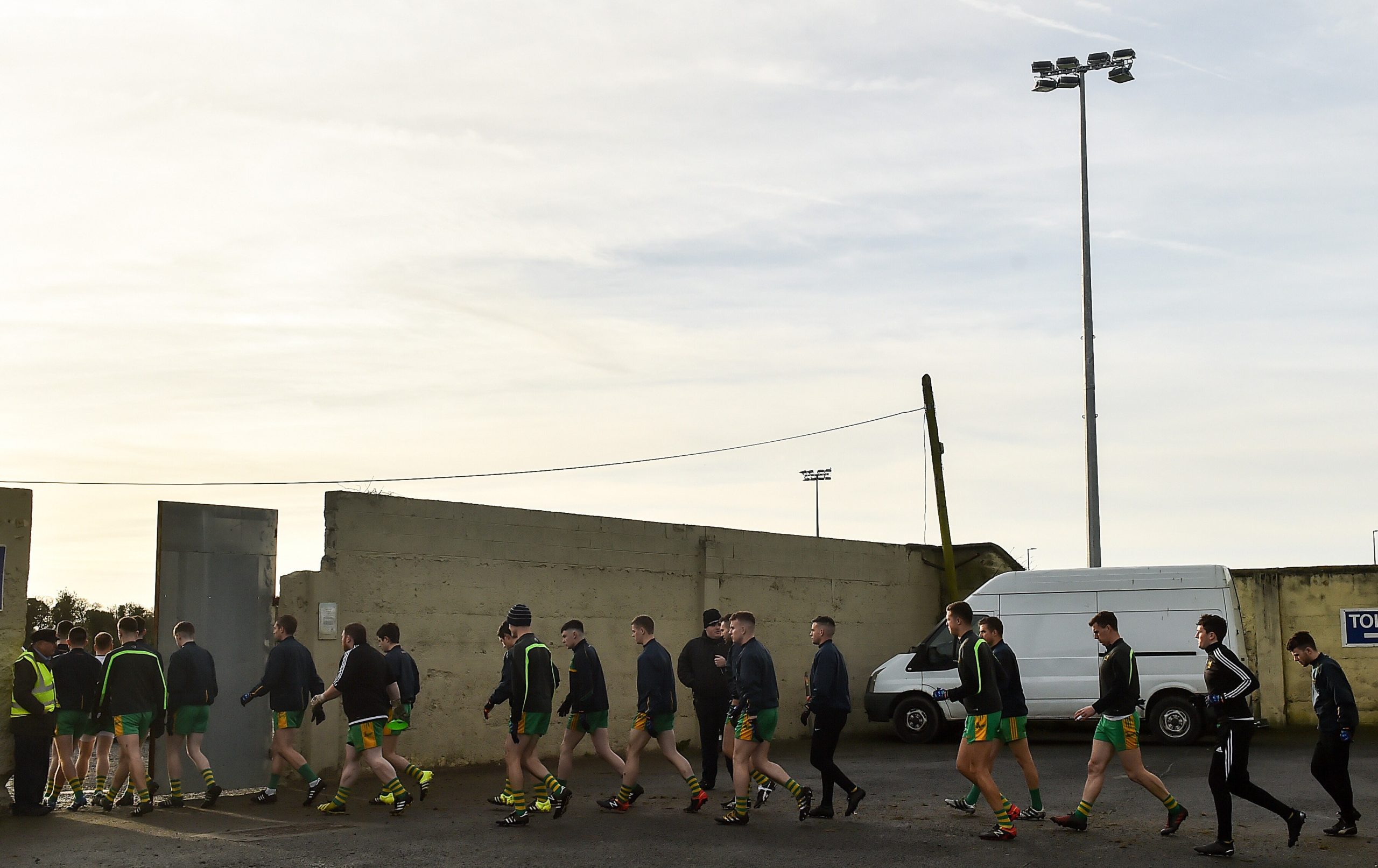


MODERN Gaelic football is faster, more physical and more demanding than ever.
Between league, championship, travel, work and training, players need a strong engine just to cope with the season. And from a coaching point of view, nothing matters more than availability. A team only has real options on match day when the best players are healthy, fit and ready to perform.
Here’s the problem: not everyone gets minutes.
Even with busy schedules, you’ll always have lads who are regular subs, lads who come on late, and lads who don’t get on at all.
Over time, that group starts to detrain, not because they’re lazy, but because they simply don’t get the same running volume or high-speed exposure as starters.
If you ignore it, you end up with a ‘two-speed squad’: starters fit and sharp, subs undercooked.
Then when injuries hit or you need impact off the bench, the gap shows.
That’s where post-game top-up runs come in.
What are top-ups really for?
Top-ups are not punishment. They’re a catch-up tool. They help non-starters stay physically close to the starters, especially in the areas that matches give you for free:
– Total distance
– High-speed running
– Sprint distance
– And stable weekly exposure to harder running so hamstrings, calves, and the aerobic system don’t fall behind
Interestingly, subs often get plenty of sharp actions in training, accelerations, decelerations, short bursts, because MD+4 sessions can be intense. The main gap is usually volume and higher-speed running.
Why HIIT works well post-game
After a match, time and space are limited. You might only get 10 to 15 minutes on the pitch, and often it has to be straight-line running. That’s why many teams lean on high intensity interval training (HIIT) for top-ups. It gives a big cardiovascular hit without needing loads of time, and it can help replace some of the high-speed work missed by not playing.
The goal is simple:
Get the top-up group’s high-intensity running closer to what they would’ve gotten in a full match.
How do you individualise it in a squad?
The smart way is to base high-intensity running on the player, not a fixed number.
A practical method is using Maximum Aerobic Speed (MAS), basically the fastest pace a player can hold for a hard aerobic effort. A simple way to measure it is a 1.6km time trial, often done in grid format on pitch lines so it’s easy with a full squad. Re-test monthly to keep it updated.
From there, anything above MAS counts as high intensity. If you also use their max sprint speed, you can set clearer bands:
– Band 4: around MAS + small extra
– Band 5: faster again
– Band 6: sprinting
This means your top-ups aren’t guesswork. They’re targeted.
Keeping it simple for buy-in
The best systems are repeatable home or away. For example:
– Players who played less than 45 minutes do top-ups
– The session might be 12–15 runs of mixed speeds
– Total time: 10 to 15 minutes
– Live GPS (if you have it) lets you adjust on the spot: if a lad already hit his high-speed numbers in 35 minutes, he needs less than someone who didn’t get on.
Over a season, this consistency keeps subs closer to starter fitness, improves accountability, and most importantly, means when you call on a player, he’s not “building fitness” in a championship match. He’s ready.
Related posts:



Receive quality journalism wherever you are, on any device. Keep up to date from the comfort of your own home with a digital subscription.
Any time | Any place | Anywhere
Get the app for the best Gaelic Life experience