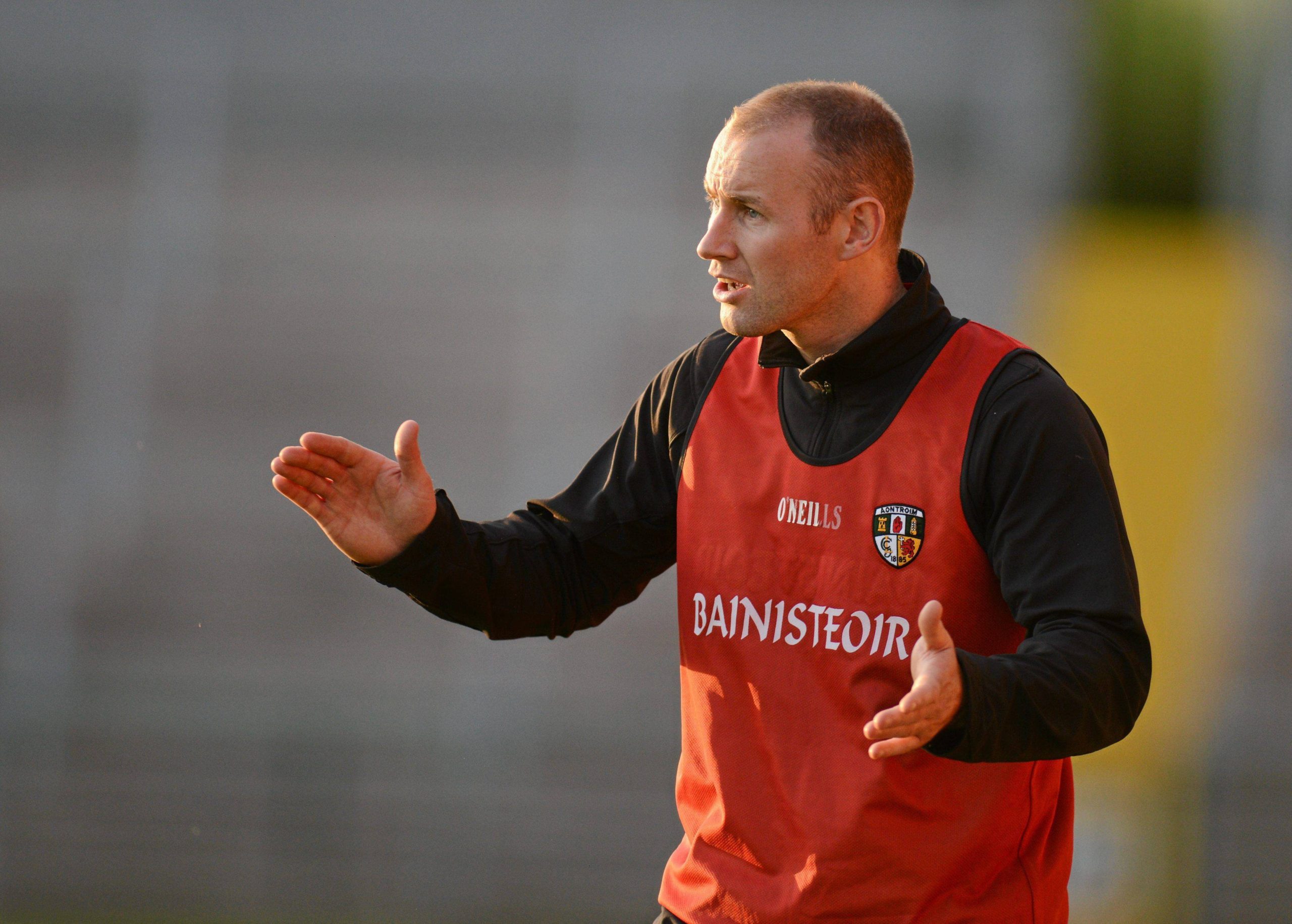


The other day I saw Waterford footballer manager Ephie Fitzgerald talk in detail about how they play second fiddle to their hurlers and it made me ponder a radical depature from what we have now.
The GAA in every county is run through a single organisation. That’s just accepted as normal, but when you look at it more closely, it’s a bit unusual. Hurling and football are completely different sports, yet they’re governed by the same county board.
It’s something I’ve grumbled about in Antrim for years. I’ve spoken before about the idea of a hurling development committee and how there has never really been any meaningful support behind it. Nothing has ever been done to help it in any real shape or form.
So here’s a question: would it make sense for every county to have separate boards for each sport?
At least then everyone would know exactly where they stand.
Take a town in England like Wigan. Could you imagine somebody saying that because Wigan is only one town, Wigan Athletic and Wigan Warriors should both operate under the same governing structure? It sounds ridiculous because they’re two completely separate sports.
Yet that’s effectively the model we have in the GAA.
There’s a lot of talk these days about integration and bringing everything under one big umbrella. Maybe there are benefits to that. But from where I’m standing, I’d rather see the GAA govern the games nationally while counties had separate structures underneath: an Antrim Hurling Board, an Antrim Football Board and so on.
People will immediately say that’s too complicated, but I actually think it could create a lot of efficiencies. It would allow counties to establish individual funding streams and, perhaps most importantly, create genuine parity.
Whenever people talk about parity for hurling, the response is usually supportive in principle. But parity has to mean something tangible. It has to mean comparable investment and comparable resources.
Take a county like Limerick, where football is clearly the poor relation to hurling. Under a separate structure, football could establish its own county board and focus entirely on developing the game. At the moment, there can be a tendency to think that if one side gets something, the other side has to get something too. I’m not convinced that’s always the most efficient way to allocate resources.
The reality is that every county will always have internal dynamics and priorities depending on who’s in charge.
For example, if I became CEO or chairman of Antrim GAA tomorrow, my priority would be hurling. I’d make no apology for saying that. I’m a hurling man and that’s where my passion lies.
But then you have to ask yourself: is that really the fairest way to run a county organisation? Should one person’s sporting preference have that much influence?
Equally, somebody else could come in who is completely committed to football and only pays lip service to hurling.
To be honest, I’m not even sure whether the current Antrim County Board leans more towards football or hurling. But that’s exactly my point.
With separate structures, there would be no ambiguity. You would have a dedicated hurling board run by hurling people, focused entirely on promoting and developing hurling. It wouldn’t be some hidden agenda or dirty secret. The objective would be clear from the outset.
Separate boards wouldn’t solve every problem, but they would make accountability much clearer. They would create cleaner funding streams, clearer priorities and a more honest conversation about what each sport actually needs to grow.
Whether that’s a road the GAA ever wants to go down is another question entirely. But it’s certainly a debate worth having.
I also want to touch on the news that Davy Fitzgerald has stepped down as Antrim hurling manager.
I’m tempted to say “I told you so” because, two years ago, I argued that this appointment was going to end in failure. Unfortunately, that’s exactly how it has turned out.
For me, this comes back to decision-making. I was quite vocal when Davy Fitzgerald was appointed. At the time, I said I didn’t think he was the right fit for Antrim. A lot of people took that as a criticism of Davy personally, but it never was.
In the right circumstances, Davy Fitzgerald is exactly the type of manager you would want. If Antrim had a strong underage structure, if we had U20 teams winning Leinster titles, if we were already established as the fifth or sixth-best county in Ireland and knocking on the door of an All-Ireland, then Davy Fitzgerald is precisely the phone call I’d make. That’s a fact.
If you already have a strong squad and a strong structure, he is the type of manager who can give you that final push. He can bring an intensity and edge that might be enough to get a team over the line.
But that wasn’t the situation in Antrim. Antrim were sitting somewhere around tenth or eleventh in the country. We had an ageing team. We had players nearing retirement and others coming to the end of outstanding inter-county careers. Everybody could see that a period of transition was approaching.
How the county board didn’t recognise that reality, I honestly don’t know. Instead of planning for a rebuild, they brought in a manager whose strengths are best suited to a team that is already close to competing for major honours.
The reality is that Davy Fitzgerald could not deliver what the county board appeared to want from him because the resources simply weren’t there.
He couldn’t introduce new players quickly enough. He couldn’t replace years of experience overnight. He was trying to manage a transition while also attempting to remain competitive at the highest level. That’s an incredibly difficult balancing act.
This year in particular, a number of players walked away from the panel. Davy was publicly critical of some of those decisions, but I think that’s where there was a disconnect.
What Davy perhaps didn’t fully appreciate was the amount those players had already given to Antrim hurling.
For five or six years under Darren Gleeson, that group had been pushed to their limits. Darren did a remarkable job with Antrim and extracted every ounce of potential from that squad. He demanded enormous commitment and the players responded. But eventually every cycle comes to an end.
By the time Davy arrived, Some were simply at the stage where they had nothing left to give.
That doesn’t make them disloyal. It doesn’t mean they lacked ambition. It just means that every intercounty player eventually reaches a point where the tank is empty.
Managers can improve teams. They can change cultures. They can squeeze extra performance from players.
What they can’t do is replace structures. And that’s ultimately the lesson Antrim should take from the last two years. The county didn’t need a miracle worker. It needed a long-term plan.
No manager, regardless of reputation, was going to change Antrim’s trajectory overnight without the foundations being in place underneath.
Receive quality journalism wherever you are, on any device. Keep up to date from the comfort of your own home with a digital subscription.
Any time | Any place | Anywhere
Get the app for the best Gaelic Life experience