

By Patrick Morrison
IN Gaelic football, the situation that possibly has the highest amount of pressure for the goalkeeper would be that of the one v one situation. In this event you are in direct combat with a goal-bound opponent and there can only be one winner. Them or you.
During this situation, time can feel as if it has sped up and the whole event can feel as if it has happened within the blink of an eye. This in turn gives you that feeling of having less time to make decisions causing indecision which is ultimately fatal in these situations. It is important in one v ones to stay calm and keep a ‘Blue Head’ to allow you to ‘Think Clearly Under Pressure’ (T-CUP).
The best place to gain experience for one v one situations is from real life examples. At the next training session after any game, after you have completed your warm-up, your first drill(s) should be to replicate anyall goal chances that occurred during the game. With your coach recreating what happened, discuss all your possible options and then decide upon your best three options for that situation.
Now if this situation happens again, you have a set of options to follow that will slow down time giving you better awareness of what is happening, reduces decision-making as you have only three options to choose from therefore reducing indecision as well. This in turn reduces the number of mistakes made and ultimately the number of goals scored.
This is exactly how I came up with my MSG One V One Principles.
These are a set of principles for goalkeepers to follow whenever they are faced with a goal-bound attacker. Each principle has a set of parameters using the geographical landmarks of the pitch as a guide. Each principle also has its own unique blockingsaving technique in relation to the context of the situation being faced.
This allows for better decision making, opponent manipulation and gives the goalkeeper increased control in these situations. Each principle is named appropriately to allow for quicker decisions and faster reactions to a developing situation.
In Gaelic football, there is usually one final pass to play the shooter in on goal, whether it be an over the defender pass or a flat pass to the runner off the shoulder, it acts as a cue for the goalkeeper. Whenever the goalkeeper sees the final pass being made is exactly when they MUST rush the goal-bound attacker aiming to “Close The Gap” (MSG Pr.6), as much as possible before the shooter receives the ball.
One v One Shot
This is when the shooter is coming in from an angle, from the corner of the penalty area to the end line, and the goalkeeper is more than four metres from the attacker. The key for the goalkeeper is to stay bigtall in their set position, not crouching or flat footed and ready for the shot.
Watch the shooter’s body language as this will give an indication of where they are aiming for. Open body (shoulders openhead up) meaning a placed shot to the goalkeeper’s nearside through the GK or same side shot), whereas a closed body means (shoulders closedhead down) meaning a power shot to the goalkeeper’s farside (through the GK or across their body). If the attacker solosbounces the ball the goalkeeper creeps forward to narrow the distance always ready for the shot.
One v One Block
It is when the shooter comes in at an angle and the goalkeeper is between two to four metres away. Try to visualize a set of ‘Angle Lines’ coming from the ball to each post behind you. These are your Scoring Angles, anything outside of these lines is a miss so you have instantly reduced the amount of area you need to cover.
Plus, you have closed the shooter down so the amount of goal they have to shoot at has been reduced also. The goalkeeper ensures that they stay in the centre of the Scoring Angles at all times, if the shooter moves, the goalkeeper moves with them.
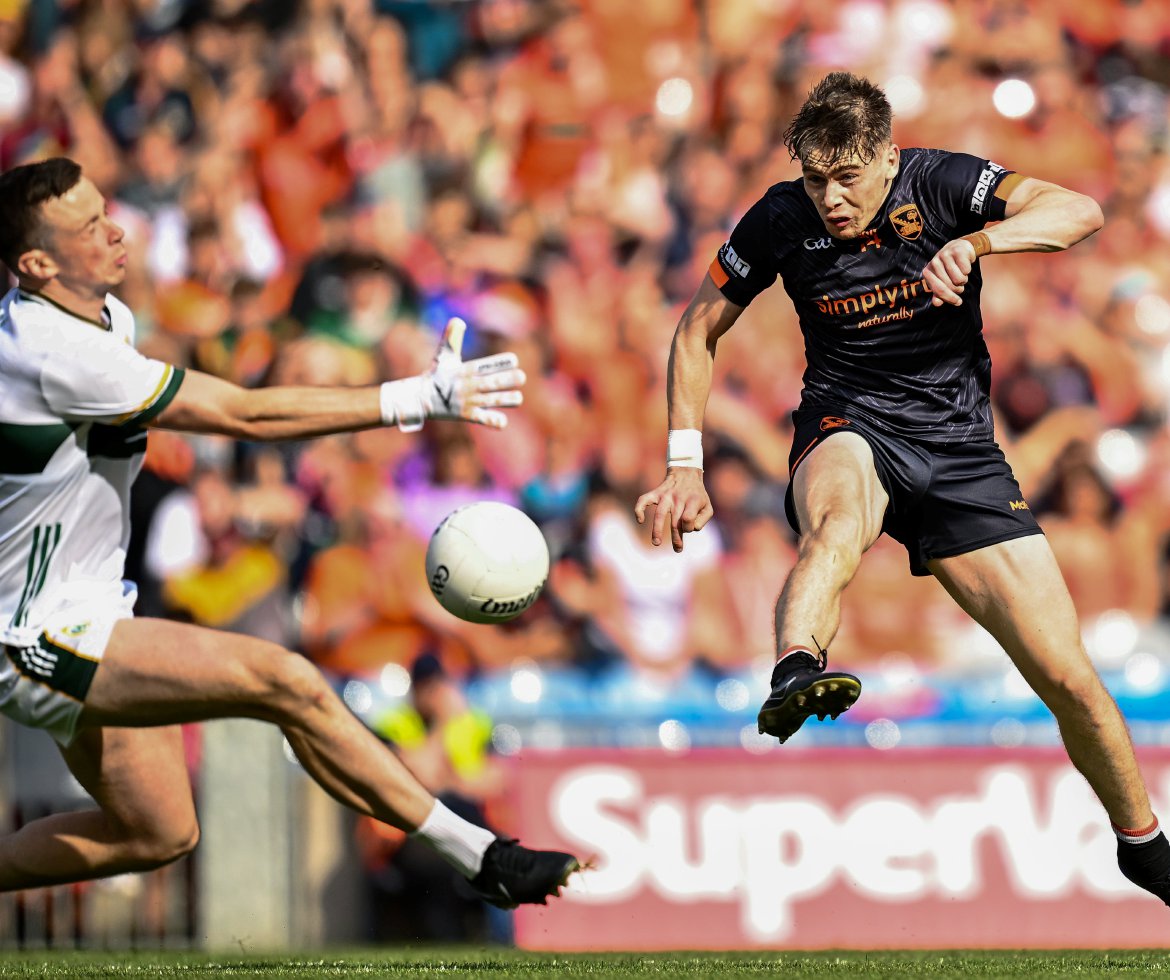
If the shooter goes to shoot with their rightleft foot, the goalkeeper ‘mirrors’ the side they are shooting off (shooter goes right, GK goes leftshooter goes leftGK goes right). When they mirror the side they go into a K-Block technique. This technique is performed by going onto bended knee on the shooting side, trailing the other leg along the ground on the non-shooting side, arms at either quarter to five or quarter past seven to reduce the area they can shoot through, head dipped chin to chest, keeping your balance, anticipating the shot and bracing your core muscles.
One v One Baseline
Is when the shooter is coming in along the end-line. Always be wary of them wanting to cut back infield to get a better angle. The goalkeeper can approach by blocking off the route infield exposing more of the near-post shot.
If the attacker cuts infield the goalkeeper immediately moves into the attacker and engages. Now they have become a defender, they must stay with the attacker until they have been dispossessed or until another defender arrives to help or take over tackling the attacker.
The goalkeeper must stay on the attacker at all times until they can pass them on to a teammate. Resist the urgecalls to retreat to your goal until help has arrived simply because you will be lobbed once you give the shooter space to score.
One v One Curtain
It is when the shooter comes at an angle and the goalkeeper is two metres or less from the shooter. Closely watch the shooter’s hips for clues to what they are going to do as these cannot move much and show what side they are going to.
Show the shooter toward the angle and not back toward the goal, allow them to get ahead of you forcing them to shoot usually low and hard and do not panic as your catch-up time will be when they have to drop the ball to shoot. If they do not shoot straight away follow their run with side shuffling footwork always ready to curtain dive.
To perform the curtain dive, think of a curtain being pulled closed. As it is being pulled closed it touches the floor the whole way. The goalkeeper must perform their dive the exact same way by sliding their body across the ground, always ensuring contact with the ground or at the very least the minimum of space between both. The goalkeeper also performs the dive toward the ball and not parallel to the shooter to minimise the shooting space or the attacker. Strong Hands are a MUST.
One v One Bullet
This is when the shooter comes straight down the middle unopposed. In this situation the shooter has two options – a power shot or a placed shot.
In this situation it is the power shot that has the best chance of beating the goalkeeper, so if the goalkeeper advances on the side of the power shot it negates that option for the shooter. At first the goalkeeper uses fast steps to Close the Gap but then slows to Baby Steps once they get close enough.
Again, look for the OpenClosed body language and force the ‘Open’ shot. Once the shooter has committed to the shot the goalkeeper executes a last-ditch blockdive across into the line of the shot. The goalkeeper essentially Takes the Bullet very much like a secret service agent protecting the president from assassination, the goalkeeper protects the goal in the same way. A real-world example of this is David Clarke’s famous save against Alan Brogan in 2012.
These are an overview of the main types of one v one situations that a goalkeeper will face. Anything further would be of an individualized andor ad hoc nature.
These principles are aimed at reducing the decision-making process while giving increased control to the goalkeeper in these situations and can be tweaked to each individual goalkeepers style or preference. The goalkeeper must remember to stay mentally strong, brave and trust their training. After that all they need to do is execute their One v One.
If you would like to discuss anything within this article or would like to have more information in regard to other goalkeeping areas, please do not hesitate to contact me on any of the avenues below.
Email:
pmgoalkeeping@hotmail.com
Facebook: @MSoG11
X: @MorSchGk
OK…Kerry’s Shane Ryan perfectly performs the K shape to deny Armagh’s Andrew Murnin
Related posts:

Receive quality journalism wherever you are, on any device. Keep up to date from the comfort of your own home with a digital subscription.
Any time | Any place | Anywhere
Get the app for the best Gaelic Life experience