

By Patrick Morrison
WITH the vast majority of teams in all codes now having exited their respective championships, the time now turns to some well-earned down time and a chance to rejuvenate the batteries for next season.
For some it will be a chance to take a complete break until the new year, maybe even squeeze in a winter break and enjoy the festive season. For others it will be a chance to prepare for the season ahead.
Now, it is important that players do take this time to have a much-needed break from football and focus more on themselves.
My suggestion would be to not totally forget your game and plan it into your weekly routine if only it be an hour per week. Most players nowadays continue to keep in shape while others like to go and partake in other sporting interests over the winter months.
This time of the year has always been known as the ‘off season’ which can be the wrong mindset to portray. Remember your words have power, they don’t call it ‘spelling’ for nothing. By changing off season to ‘growth season’ it provides you with a much more proactive and positive mindset as well as a call to action rather than a complete switch off.
During no other time of the season will you, as a player, be afforded three full months without competition, to allow you to improve your individual skill set. Make sure you use it to its fullest. Take a measured evaluation of your game as it currently stands be honest without being overly critical highlighting areas of your game that you would like to improve as well as those areas that need to be improved.
Ask your peers as well as your coaching staff for feedback and advice as they have been watching you all season long, you may be surprised about what is fed back. Remember to not take any feedback personally but as more of a gift because without it you cannot improve. The more feedback you can collect the better informed you will be, and this vital information will allow you to create a more specific action plan to Grow.
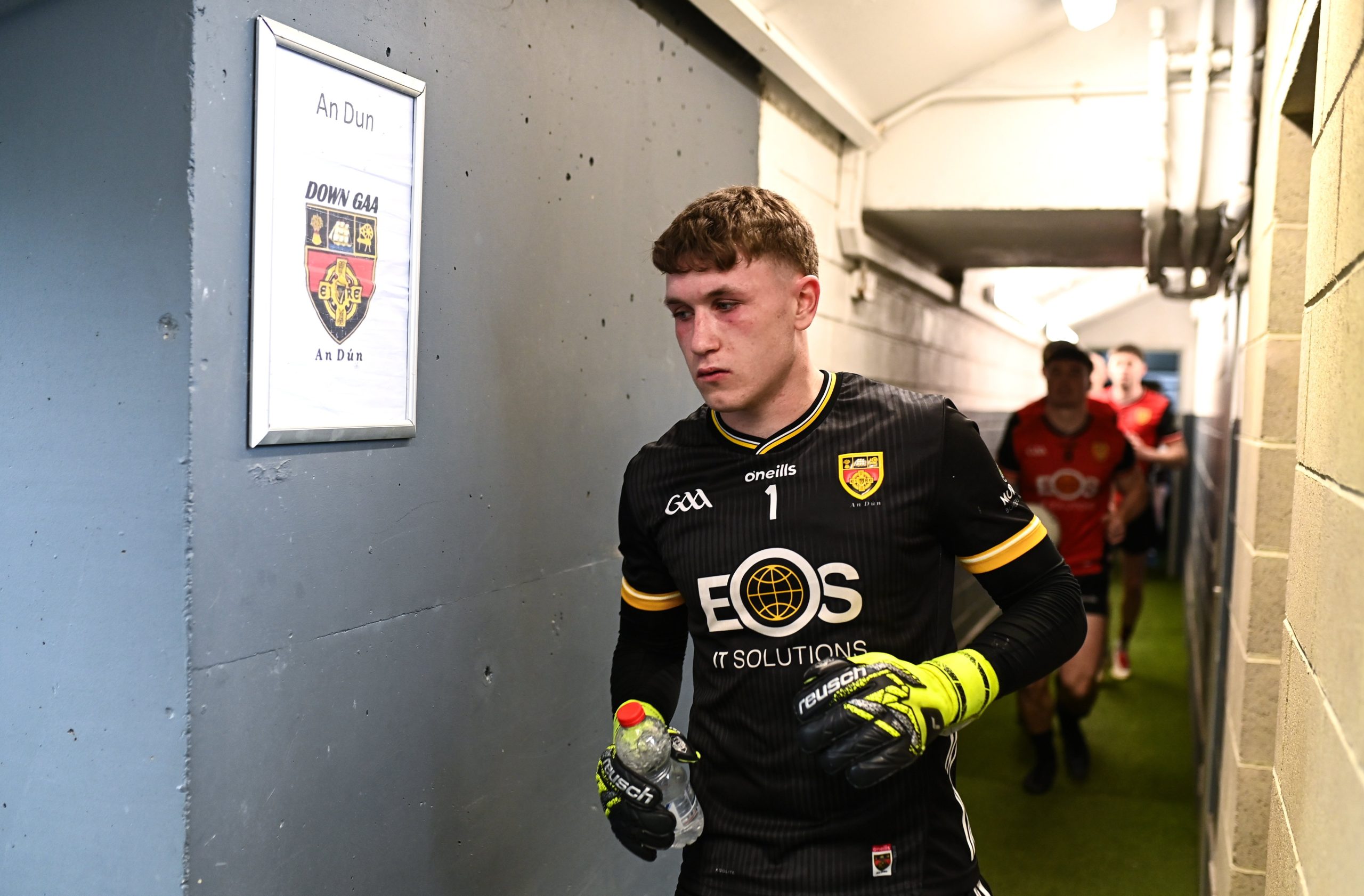
As goalkeepers, there is always something for us to be improving. It is part and parcel of the position that we must keep getting better and evolving with the game that is played in front of us. It could be said that our position must keep a step ahead of the game in terms of our understanding, game knowledge and game management as we are the only position on the field that is in the thick of the action but has the luxury of time to continuously assess the state of play and influence all areas of the pitch through our communication.
The obvious list to put in the rest of this article would be the physical attributes used by all goalkeepers. Kicking, catching, footwork, diving, one-on-ones, high ball etc, are all areas that need worked on but to really improve as a goalkeeper it is the forgotten or lesser thought of areas that have the biggest influence on improvement. These areas are worked on less simply because of most people’s inability to express how they use them.
Here is my list of lesser-known areas to help goalkeepers improve during their growth season:
THREAT NULIFICATION
Also known as ‘scanning’ but I prefer my description because it states exactly what you are looking for.
With your season over I can hear you ask, ‘how am I going to train that?’ There is still plenty of football to be played at club level so if you get to one of these games position yourself behind one of the goals and pretend you are the goalkeeper for that game. Look for threats and consider how you would nullify them. It may be meeting the man yourself or instructing teammates to do so instead.
COMMUNICATION
Improve this using my sheepdog communication drill (article in Gaelic Life with same title). Simply put you use your communication skills to direct a blind folded teammate through various gates and cones. As you get better you can introduce more blindfolded teammates and/or gates.
GAME SMARTS
Develop your understanding of the game and especially the modern game with the new rule changes. Sit down and have a conscious in depth study of how and where you can use the new modern game to you and your teams’ advantage. Think in terms of game management about the areas of the modern game that will allow you to directly influence both game script and game flow effectively.
GK/TEAM LANGUAGE
As the main communicator on the pitch you should have the biggest input into the language that the team uses on the field of play. Of course, the team will have input into the creation of a team language, but you can be the one to take the lead in creating a team language. Why? There will be words or phrases that you use as a goalkeeper to help direct your teammates on defence; by writing these down and providing them to the whole team it gives you and your team a communal language that they all use.
LEARN A NEW SKILL
My best advice is to learn a skill that you have always wanted to learn but have always put it onto the back burner due to your schedule. For me the two best new skills to learn would be juggling and/or playing the piano. These skills are not just easy to pick up but directly improve your goalkeeping ability. By learning these skills, and others like them, they grow the grey matter in the cortex of the brain that also deals with hand-eye co-ordination and reaction to stimulus. So, by learning to juggle or play the piano you will also be improving your reaction time and handling ability as a goalkeeper.
Email: [email protected] Facebook: @MSoG11 X: @MorSchGk
Receive quality journalism wherever you are, on any device. Keep up to date from the comfort of your own home with a digital subscription.
Any time | Any place | Anywhere
Get the app for the best Gaelic Life experience