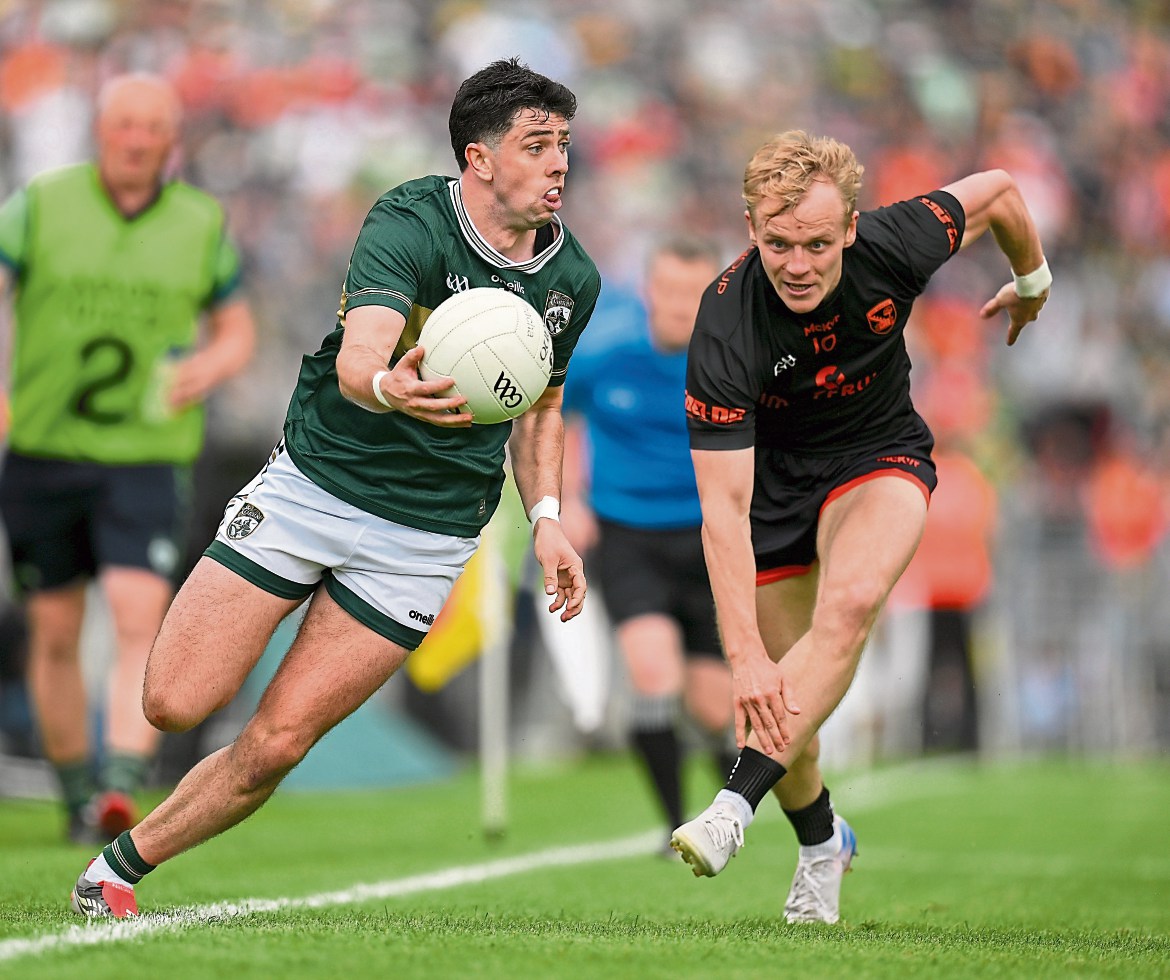


When people think about physical preparation in Gaelic football, they often focus on strength, speed, power, or conditioning. However, one area that is often overlooked is muscular endurance, which may be one of the most important qualities for GAA players.
Simply put, muscular endurance is a muscle’s ability to repeatedly produce force over a long period of time. In Gaelic football, players are expected to sprint, tackle, jump, change direction, kick, and accelerate repeatedly over 60 to 70 minutes. As fatigue builds, performance often drops.
Research across many sports has shown that injuries are more common later in games when players become tired. Muscles begin to work differently, technique changes, and movement quality can decline. In Gaelic football, this might mean a player loses speed tracking a runner, struggles to hold good tackling positions, or loses stability when changing direction.
Developing muscular endurance can help delay this fatigue.
A player with good muscular endurance can continue producing quality movements deep into the second half. They recover quicker between high-intensity efforts and can repeatedly make runs, break tackles, and defend effectively. This becomes especially important during championship matches, extra time, or periods with multiple games in a short space of time.
Traditionally, many coaches believed muscular endurance improved simply through running and conditioning sessions. While aerobic fitness is important, it may not fully prepare the muscles that experience the greatest demands during Gaelic football.
The hamstrings, calves, glutes, and quadriceps all work repeatedly during sprinting, jumping, kicking, and changing direction. These muscles need specific training to continue performing late in games.
This does not necessarily mean endless sets of 20 or 30 repetitions in the gym. In many cases, the first half of a high-repetition set is too easy to create a real training effect. Instead, coaches are increasingly using methods that place the muscles under longer periods of stress.
Methods such as drop sets, supersets, pulses, and controlled tempo exercises can create greater muscular endurance adaptations while still developing strength.
For example, a player may perform weighted calf raises until fatigue before immediately continuing with bodyweight repetitions. Hamstring exercises can be followed by short pulses or isometric holds to challenge the muscle further.
The goal is simple: teach the muscles to continue working when they become tired.
Improved muscular endurance may also help players recover faster between repeated efforts. This means a midfielder can continue making runs late in the game, a defender can repeatedly track runners, and a forward can still produce explosive movements in the closing stages.
Importantly, muscular endurance should not replace strength or power training. Instead, it should complement it. Stronger muscles combined with better endurance create more resilient athletes who can perform consistently throughout the entire match.
In modern Gaelic football, games are faster, more physical, and more demanding than ever before. Players who can maintain movement quality, technique, and physical output deep into the second half often make the biggest impact.
Developing muscular endurance may not be the most glamorous part of training, but it could be one of the keys to improving performance and reducing injuries in GAA players.
Receive quality journalism wherever you are, on any device. Keep up to date from the comfort of your own home with a digital subscription.
Any time | Any place | Anywhere
Get the app for the best Gaelic Life experience