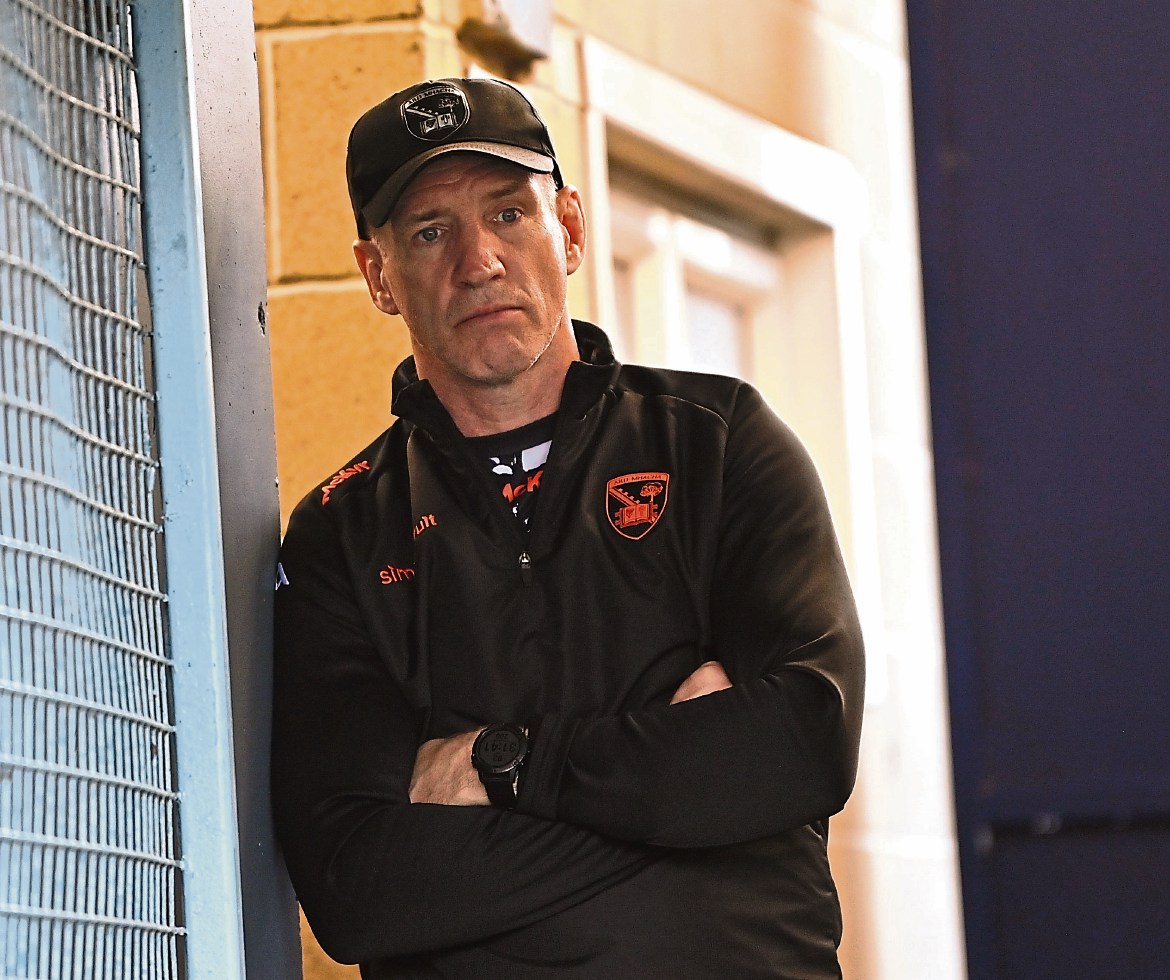


Winning is for extremists. As Kieran McGeeney put it a few months ago, “Lots of people love to play Gaelic football and that’s great. But if you want to win, you have to put everything on the line. And I mean everything.”
I thought of that when I met Peter O’Mahony this week. I also thought of Buck Shelford, the ferocious All-Black captain, under whom New Zealand won 49 consecutive tests. In a notorious match in 1986 which came to be known as The Battle of Nantes, the French had decided that to beat New Zealand, Shelford had to be eliminated. In the tunnel on their way out on to the pitch, two of the French players headbutted each other, while another banged his forehead against the concrete wall until blood was streaming down his face. “I’m sure they were on some form of juice,” the New Zealand coach said afterwards, “and it wasn’t bloody orange juice.”
After fifteen minutes, Shelford was kicked in the face, knocking out three teeth. He spat them out and played on. Five minutes later he was sucker punched to the head, staggering him. He played on. A minute before half time, the French prop Jean-Pierre Garuet-Lempirou dived full length at him, ramming him in the face with his forehead, knocking him out cold. He was unconcious for two solid minutes. He played on. In the second half, he was kicked in the testicles. He played on, tackling, running, passing, more and more ferociously. Afterwards, in the changing room, when Shelford slipped off his underwear, his team mates reacted in horror. As Sam Walker describes it in his book Captain Class,
“There was a puddle of blood at his feet. His thighs were stained red and caked with bits of fatty tissue. His scrotum had been torn open and one of his testicles had fallen out of the breach and was dangling between his knees.”
After surgery, Shelford dismissed it, saying, “They packed it all away guys. Everything still works. I never realised testicles are so fucking big.”
Peter O’Mahony’s certainly are. His biography ‘All In’, written with Dion Fanning, is a fascinating insight into the soul of an extremist. He went to St Joseph’s National School in the Mardyke which was a fanatical GAA only hub. No rugby. Ever. A place where the very mention of the foreign game was considered indecent. So this 5 year old boy brought his rugby ball in every day. Every day, it was confiscated by the brothers. Every day they punished him. They made him stand with his face against the wall during breaks while the other children hurled and played. He just kept going in, as he puts it, “jaw jutted out and determined.” Eventually, amazingly, the brothers cracked. By fifth class, O’Mahony’s implacable inner self had engineered a school rugby team. As Tony Blair wrote about Brendan McCionnaith, the leader of the Garvaghy residents
“He was the unreasonable of the unreasonable of the unreasonable. In the premier league of unreasonableness, he left every other faction in every other dispute gasping in his wake. He took unreasonableness to an art form. He conceded nothing. And I mean nothing.”
This obsession is impossible to explain. Peter is perplexed when I raised it with him. He just doesn’t see it.
Here is a typical extract from the book. “I hated losing. Clive O’Mahony was scrum half and I was playing no.8. If anything went wrong, in training or in a match, we’d abuse each other flat to the mat. If people weren’t trying like I thought they should be trying, I’d offload on them. I could never accept people making mistakes or not giving their all. When we did lose, I lost the plot. I can remember the despair…”
He is talking about the Cork Con u10 team. Soon, he was in the senior team, ” a team of nasty ***kers” as Peter puts it, an environment where he was absolutely at home. He wasn’t particularly talented. He wasn’t particularly quick. He didn’t play with imagination. But like many of the sporting greats, his team won. His ego, like Shelford’s, demanded for him the success of his team. Winning was the only thing that mattered. So he did the jobs that nobody else wanted to.
Eric Cantona once scornfully called Didier Deschamps a “porteur d’eau” (water carrier). Deschamps had been given the French captaincy after Cantona was suspended for the karate kick. Cantona told reporters that players like Deschamps “can be found on every street corner” and that he was “a limited footballer with no imagination.” When Deschamps was asked about this, he said he was proud to be the water carrier for his team. Deschamps captained Marseille to the champions league and France to the World Cup. Like O’Mahony, he was an obsessive who made his team mates look good. Without water, everything withers and dies.
Peter says he was “always on. No switching off. Everything was for the team. Never late. Always in the correct gear. Homework always done. Never let the group down.”
He loved Joe Schmidt’s merciless and micromanaged regime. When I ask him why, he says, “Emotion was replaced by delivering accurate rugby.” When I say that sounds like a logo for DHL, he ignores me. I laugh. He has a puzzled expression. He describes Joe as brainwashing the team.
“If you didn’t know something, Joe would annihilate you. Scream into your face. He would tell you to **** off behind the goals and stay there. It was an unbelievably intense and stressful environment. Everything, absolutely everything was choreographed. He would scream numbers at us as we did a childrens’ passing drill, ratcheting the pressure up and up. If you messed up, he would be howling into your face. Seasoned internationals collapsed under the pressure. If you walked between drills, he would scream “Why the hell are you walking?”
O’Mahony says simply, “I loved it. Joe programmed those of us who could stick it so you didn’t have to think about your role. It meant I could concentrate on being really physical.”
When I ask him about that, he says, “Rugby is mostly about who is the most physical. Who hits hardest. Who is prepared to go farthest. I loved it. ”
Joe was “mental” he says, but that made two of them. When Peter played against New Zealand for the first time, he was up against Richie McCaw, another extremist. After the game, Peter went to the New Zealand changing room to swap jerseys with him. Ma’a Nonu was guarding the door. When Peter told him why he was there. Ma’a said, “**** off.” When Ireland beat France in Paris to win the Six Nations, O’Mahony had another savage battle (“I really enjoyed it” he says), this time with Louis Picamoles. “I had a lot of respect for him so I went in to swap jerseys. He told me to **** off.” A normal person might see a pattern emerging.
When South African forwards coach Johann van Grann took over as Munster coach, O’Mahony says that “an aspect of that Munster team’s culture he couldn’t understand was fighting in training, which was regular enough. It was something I wouldn’t have given a second thought to.” In the book, he gives an example:
“A group of Munster supporters had won a competition to come to South Africa with us. At training, I had a row with Jean Kleyn. After training, I tapped him on the shoulder and said, “I’m sorry about that.” Jean shrugged his shoulders and told me to **** off. I spun round and smacked him. The competition winners had a ring side seat as myself and Jean had a full fist fight, going right at it.”
His description of his rugby obsession reminds me of the great method actor Daniel Day Lewis, who goes into character throughout a film shoot and stays in it until the final frame is shot. Only O’Mahony’s film shoot lasted 25 years.
He captained Munster for ten years, over 130 battles. He won five Six Nations championships. He played on the Irish team that beat New Zealand in a series in New Zealand for the first time in history. He won 114 international caps. He captained the Lions against New Zealand. And he played one game of gaelic football for his school, in nets, but was sent off for battering the opposing full forward. “I didn’t realise they were allowed to tackle the keeper.”
He has come out of the tunnel now and is finally adjusting to reality, spending his days in his beloved garden and evenings with his wife and children. When we stand for photographs afterwards and I ask him to swap jerseys, he laughs and says, “**** off.”
OBSESSION…Armagh manager Kieran McGeeney says that “if you want to win, you have to put everything on the line. And I mean everything.”
Related posts:

Receive quality journalism wherever you are, on any device. Keep up to date from the comfort of your own home with a digital subscription.
Any time | Any place | Anywhere
Get the app for the best Gaelic Life experience