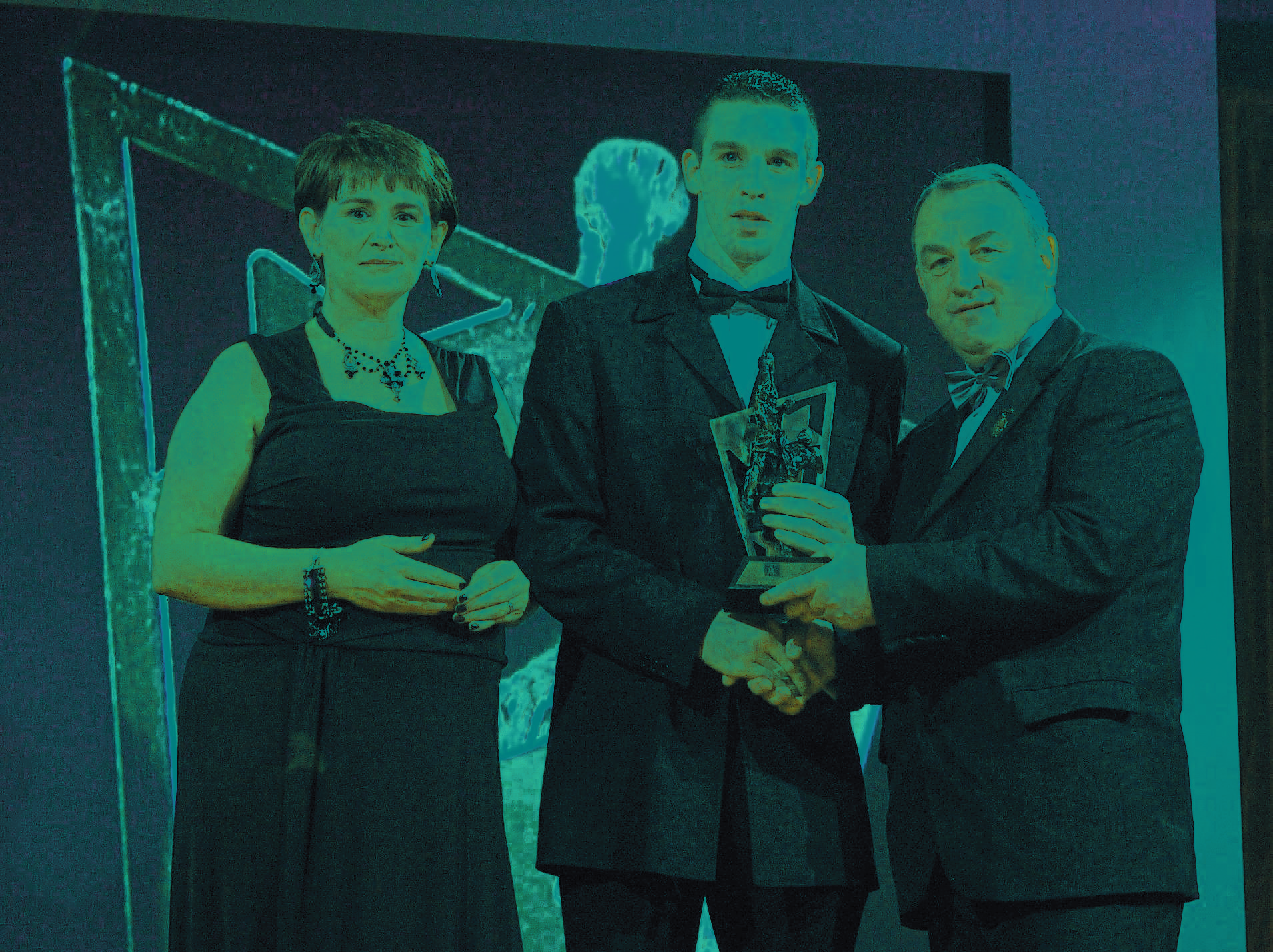


Niall Gartland takes a deeper look at the All-Stars awards and their significance…
MAYBE I’ve anorak tendencies, but off the top of my head I’ve a fair idea of how many All-Stars line the mantelpieces of Tyrone players past and present (I’m a Tyrone man in case you hadn’t noticed).
Peter Canavan leads the way with six shiny statuettes, while Sean Cavanagh won five in a star-studded playing career. Philip Jordan is next in line with four, while a few lads are three-time winners – Eugene McKenna, Conor Gormley, Brian Gormley and Stephen O’Neill. Etcetera.
There’s a fair bit of cynicism about the whole endeavour – that they don’t really matter, that the selections are all wrong (I mean, they can’t be objectively 100 percent right) – but there’s no disguising that they’re a major talking point each and every year in living memory.
We’ve spoken to two men – first, an unnamed journalist and a former member of the football selection committee, and second, Barry Owens, the only Fermanagh footballer ever to have won more than one All-Star. His second award, back in 2006, was particularly noteworthy, given that Fermanagh’s All-Ireland campaign had ended that year with a round-four qualifier defeat to Donegal.
So how exactly does the whole shebang work? Basically, I’m informed by our unnamed journalist, who wishes to remain anonymous, that the two selection committees – football and hurling – come together armed with 45 suggested nominations. After that, it’s a thrashing out session.
A dozen national reporters (most are from a newspaper backroom) make up the committees, while the sitting GAA President heads up the respective meetings. There’s usually a fair bit of debate – some All-Stars are certs, while others may make the cut after vigorous persuasion from the more statistically inclined journalists. And here’s one for you; if there’s a tie, the GAA President is allowed the casting vote, barring a conflict of interest.
The journalists will also nominate three Player of the Year candidates and their ‘Young Player’ counterparts, though those ones are subsequently voted upon by players.
Also, and this probably doesn’t come as a surprise, the National Leagues have become increasingly irrelevant in terms of who makes the respective All-Star teams. Indeed, the early rounds of the provincial championships don’t really count either. And sometimes it can be a struggle to formulate a list of 45 hurling nominations as the playing pool at the highest level isn’t particularly deep.
Stretch on for hours
The meetings vary in length. Some last 45 minutes, others can stretch on for hours. They’re also generally held these days in the nine-story PwC office complex in the Dublin docks. They sponsor the awards, by the way. The selection committee are also invited to the Awards Ceremony (this year it takes place at Dublin’s RDS Centre on Friday 30 October), though the days of All-Star tours to far-flung places like United States and the Middle East came to an end with Covid.
So that’s a taster of how it all works. And they do matter. Fermanagh legend Barry Owens won two awards back in the day (2004 and 2006) and they’ve become even more meaningful with the passing of time.
The former full-back said: “They probably mean more to me now. When you’re playing, your goal was to win the big medals, but unfortunately that didn’t happen for us. To have the All-Stars is definitely something to look back on.”
Asked when exactly he was informed that he had been named, Owens added: “Funnily, both times, the football team was announced the day before, so we didn’t know beforehand. It was nice because Peter McGinnity rang me, so it was nice to hear from him, as he was Fermanagh’s only All-Star before 2004.”
Fermanagh were always going to receive a couple of All-Stars in 2004 having made it to an All-Ireland semi-final, losing out to Mayo after a replay. Owens and Martin McGrath made the final 15, but it’s perhaps even more of a testament to Owens’ ability that he was selected in 2006. Fermanagh’s campaign came to an end in a round four qualifier, though in those days a bit more weight was placed on the league, and the Erne County had held their own in Division One.
“I had a decent year in 2006 playing-wise but I didn’t think I’d get one. The likes of Francie Bellew was going well.
“I suppose we did really well in the league. We were in Division One and we’d a really good start, we were top of the table for a few games and we narrowly missed out on a place in the league final. We were going well in those days. We lost to Donegal in the last-12 game by a couple of points. Eamon Maguire was going really well and had to go off in the first half which was a big blow that day.”
In terms of the big night, Owens said it was great to mingle with players he wouldn’t normally bump into. Still, it’s only with hindsight that he appreciates just how significant it all was.
“The nights were good craic, and it was great to meet lads from Kerry and Cork, players I normally wouldn’t have met. It was nice to meet the hurlers as well. Both times were in the City West, they put us up for the night. My parents came down in 2006. At the time I probably didn’t fully absorb it, but they were special nights and now you realise how much of a big deal it was.”
Related posts:
Receive quality journalism wherever you are, on any device. Keep up to date from the comfort of your own home with a digital subscription.
Any time | Any place | Anywhere
Get the app for the best Gaelic Life experience